

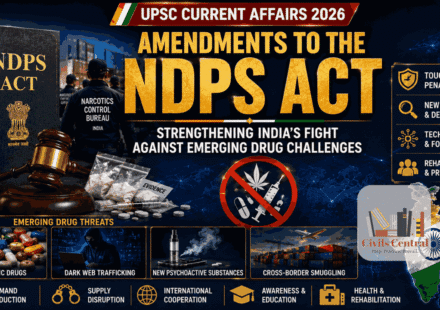
Amendments to the NDPS Act: Strengthening India’s Fight Against Emerging Drug Challenges

Learn about the amendments to the NDPS Act, their key provisions, objectives, significance, challenges, and impact on India's fight against drug trafficking. Comprehensive notes for UPSC, JKAS, SSC, and other competitive exams.
Read More
India–New Zealand Free Trade Agreement (FTA): Significance, Opportunities, Challenges and UPSC Perspective
Introduction India’s growing network of Free Trade Agreements (FTAs) reflects its strategy of integrating more deeply with the global economy while strengthening its geopolitical partnerships. The proposed India–New Zealand Free Trade Agreement…
Read More
Operation Amistad: India’s Humanitarian Mission to Venezuela | UPSC Notes
Learn about Operation Amistad, India's humanitarian mission to Venezuela, HADR, BHISHM Cube, First Responder policy, and UPSC-focused analysis with MCQs and Mains practice.
Read More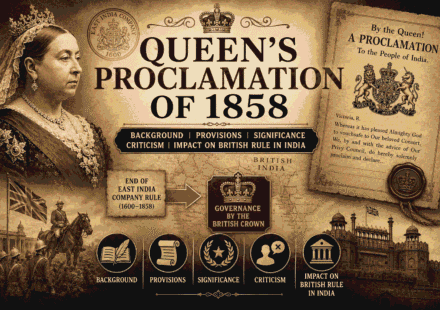
Queen’s Proclamation of 1858: Background, Provisions, Significance, Criticism and Impact on British Rule in India
The Queen's Proclamation of 1858, also known as Queen Victoria's Proclamation, was one of the most significant constitutional and administrative documents in the history of British India.
Read More
Government of India Act, 1858: Features, Objectives, Impact and Historical Significance
The Government of India Act, 1858 was a landmark legislation passed by the British Parliament that fundamentally transformed the system of governance in India. Enacted in the aftermath of the Revolt of 1857, the Act abolished the rule of the East India…
Read More
Venezuela Earthquake: Key Disaster Management Lessons for India | UPSC Current Affairs
The recent earthquake in Venezuela has once again demonstrated that while earthquakes are natural phenomena, disasters are often the result of inadequate preparedness, weak infrastructure, and ineffective disaster management. The event serves as an…
Read More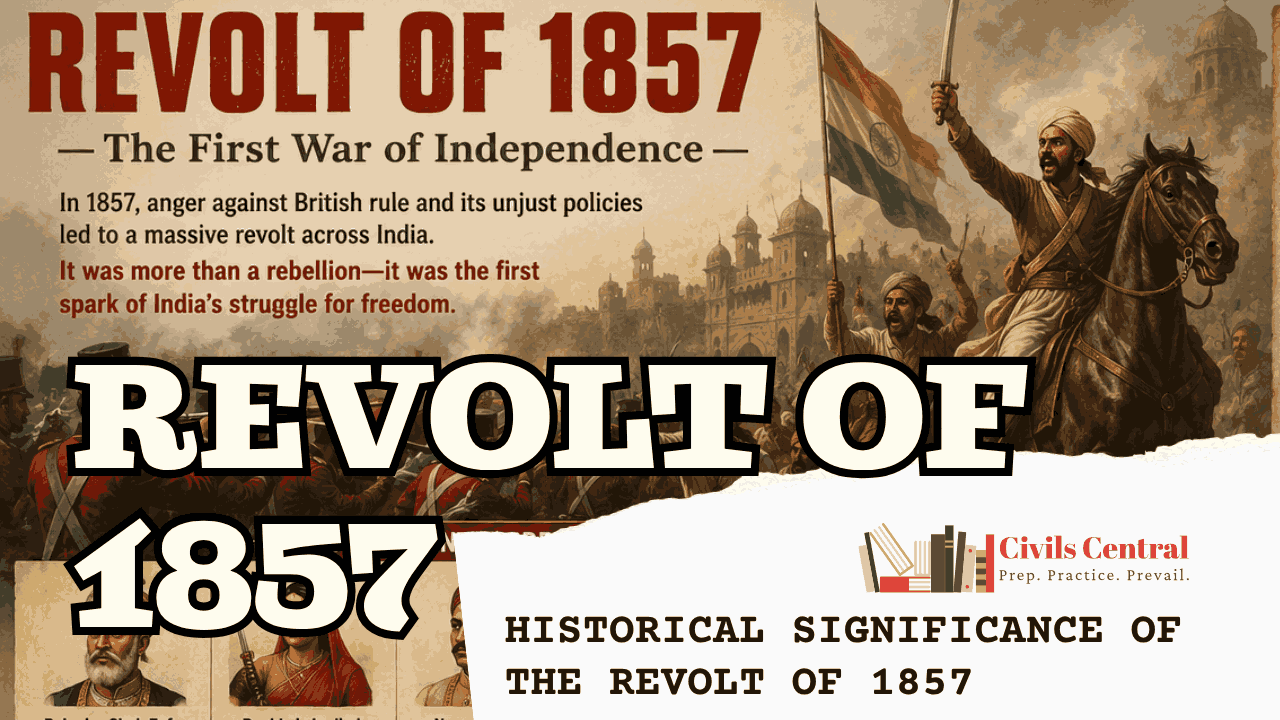
Historical Significance of the Revolt of 1857: Was it a Sepoy Mutiny, a Popular Revolt, or the First War of Independence?
Introduction The Revolt of 1857 occupies a unique and controversial place in Indian history. While its causes, events, and consequences have been extensively studied, historians continue to debate its true nature and historical significance. Was it…
Read More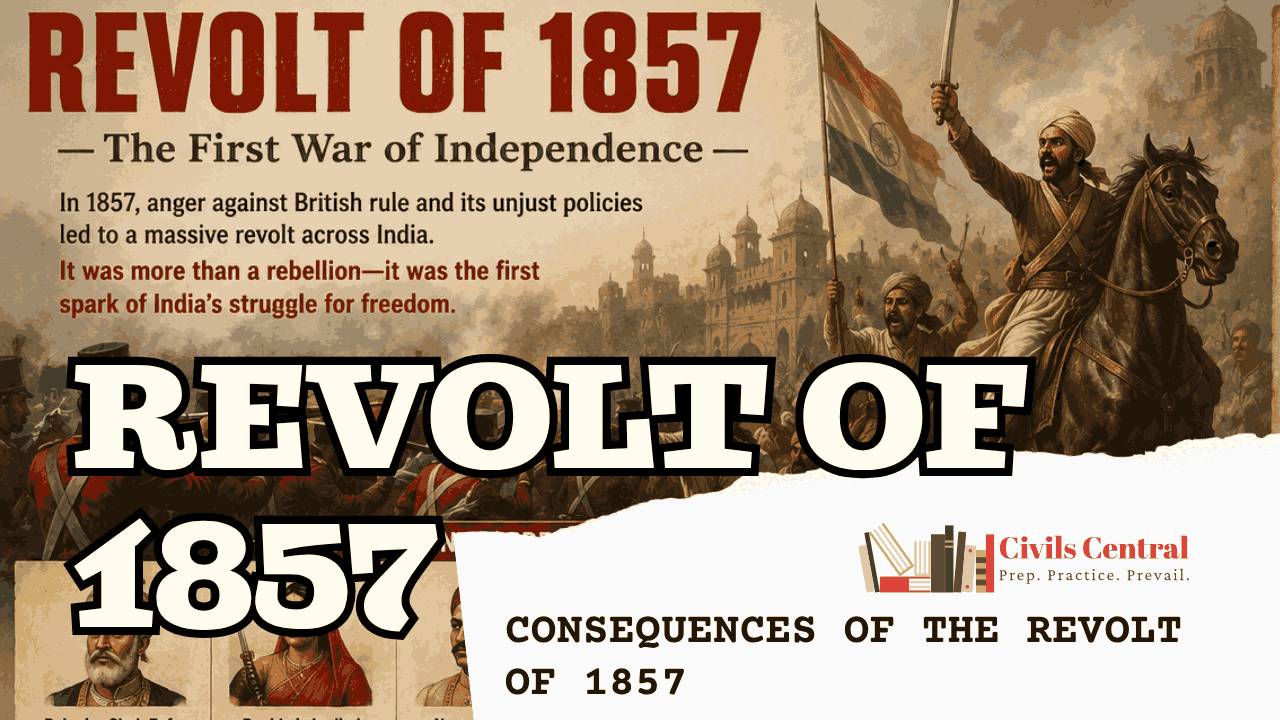
Consequences of the Revolt of 1857: Political, Administrative, Military, Economic and Social Impact
Introduction The Revolt of 1857 was suppressed militarily by the British, but its impact was profound and far-reaching. The uprising exposed the weaknesses of the East India Company’s administration and convinced British policymakers that…
Read More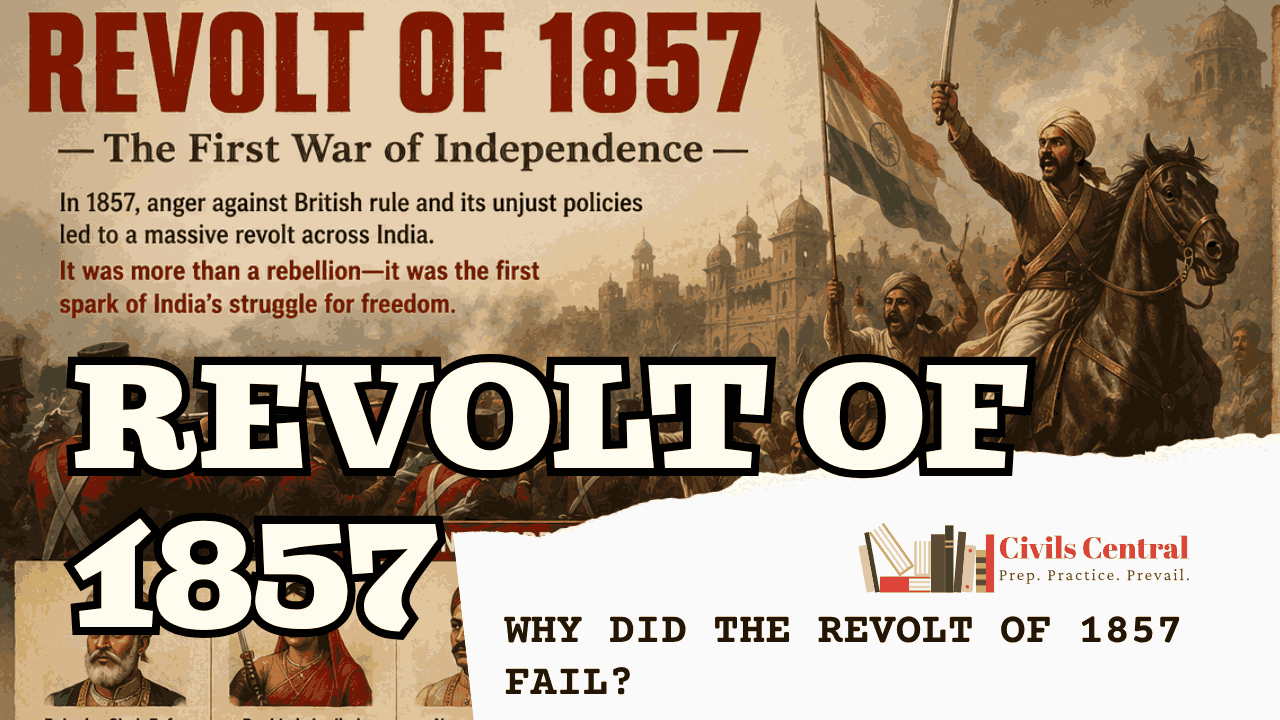
Why Did the Revolt of 1857 Fail? A Critical Analysis
Introduction The Revolt of 1857 was the first major and organized challenge to British rule in India. Beginning as a military uprising at Meerut on 10 May 1857, it rapidly spread across large parts of northern and central India, drawing support from…
Read More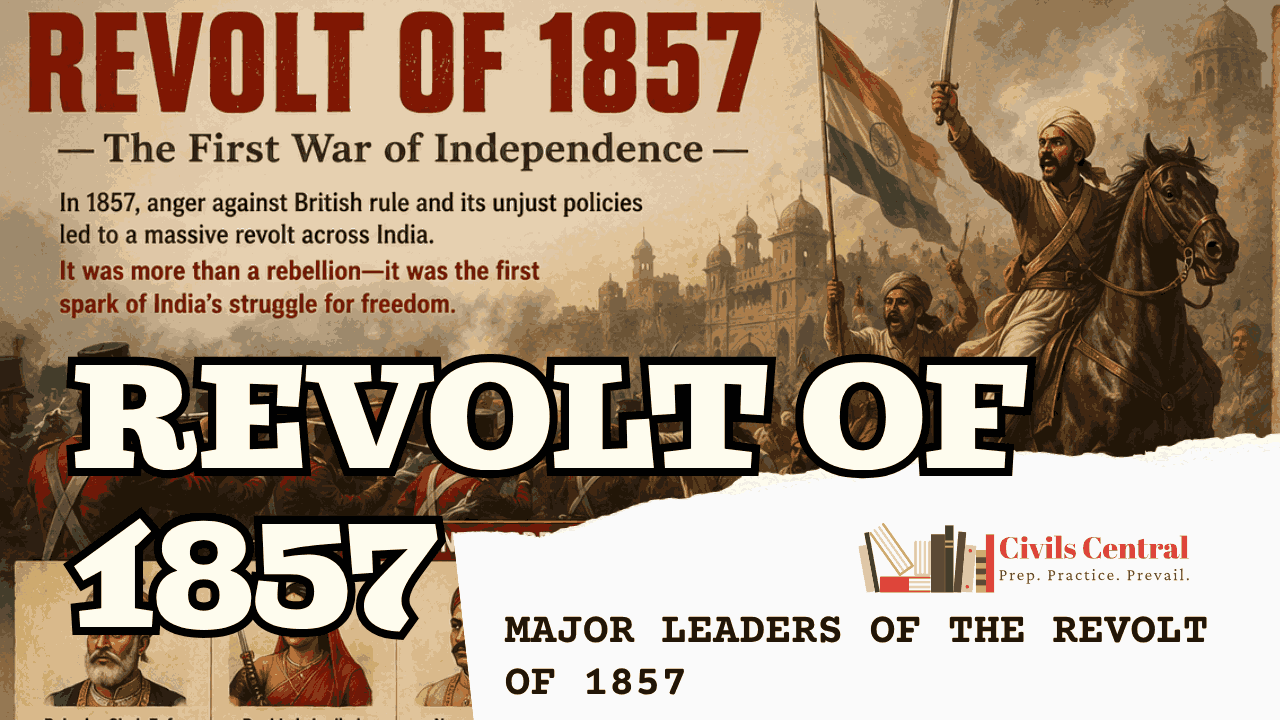
Major Leaders of the Revolt of 1857: Contributions, Role and Legacy
Introduction The Revolt of 1857 was one of the most significant turning points in the history of British rule in India. Often described as the First War of Indian Independence, it represented the first large-scale and coordinated challenge to the…
Read More