
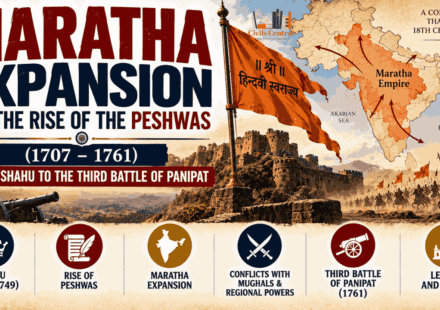
Maratha Expansion and the Rise of the Peshwas (1707–1761): From Shahu to the Third Battle of Panipat

Learn about Maratha expansion from 1707 to 1761, the rise of the Peshwas, Baji Rao I, chauth and sardeshmukhi, Maratha expansion into North India and the Third Battle of Panipat.
Read More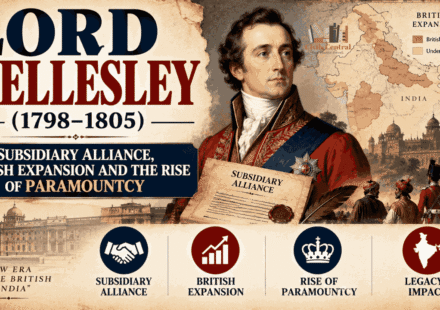
Lord Wellesley (1798–1805): Subsidiary Alliance, British Expansion and the Rise of Paramountcy
Study Lord Wellesley’s policy of Subsidiary Alliance, the Nizam of Hyderabad, Fourth Anglo-Mysore War, Treaty of Bassein, Second Anglo-Maratha War and the rise of British paramountcy.
Read More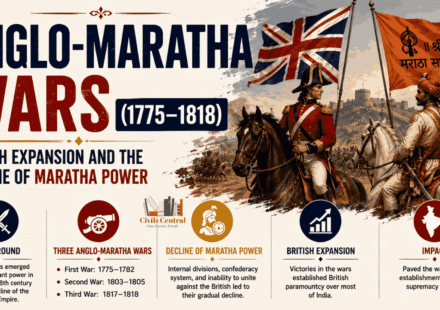
Anglo-Maratha Wars (1775–1818): British Expansion and the Decline of Maratha Power
Study the Anglo-Maratha Wars (1775–1818), including the First, Second and Third Wars, Treaty of Surat, Purandar, Wadgaon, Salbai and Bassein, major battles, Maratha weaknesses and the rise of British paramountcy.
Read More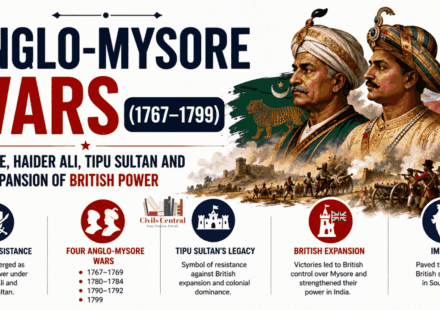
Anglo-Mysore Wars (1767–1799): Mysore, Haider Ali, Tipu Sultan and the Expansion of British Power
Learn the Anglo-Mysore Wars (1767–1799) for UPSC and JKAS: Haider Ali, Tipu Sultan, all four wars, major battles, treaties, Mysorean rockets and British expansion.
Read More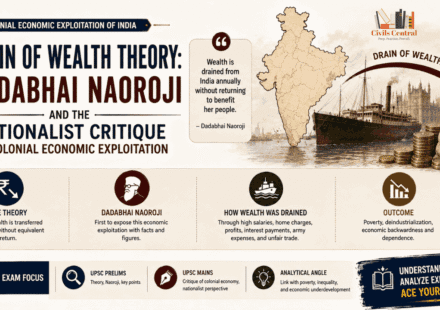
Drain of Wealth Theory: Dadabhai Naoroji and the Nationalist Critique of Colonial Economic Exploitation
The Drain of Wealth Theory developed by Dadabhai Naoroji provided Indian nationalism with a systematic economic critique of British rule. It argued that Indian resources were transferred to Britain through Home Charges, salaries, pensions, remittances,…
Read More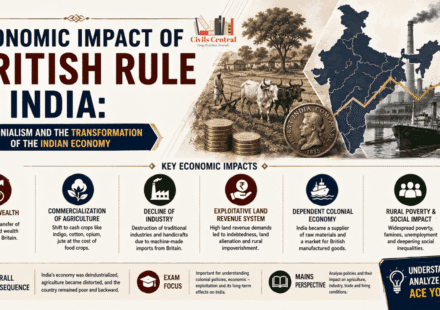
Economic Impact of British Rule in India: Colonialism and the Transformation of the Indian Economy
British rule fundamentally transformed India's economy by reorganising agriculture, weakening traditional industries, expanding raw-material exports, increasing imports of British manufactured goods and developing infrastructure for imperial trade. The…
Read More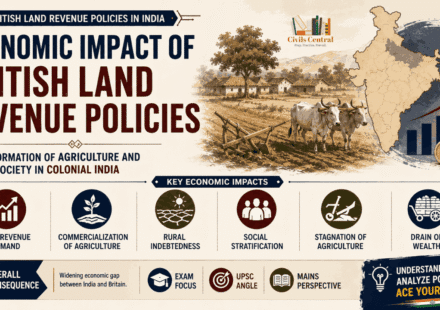
Economic Impact of British Land Revenue Policies: Transformation of Agriculture and Rural Society in Colonial India
British land revenue policies transformed India's agrarian economy by reorganising land rights, strengthening colonial fiscal control, monetising rural obligations and encouraging commercialisation of agriculture. The Permanent, Ryotwari and Mahalwari…
Read More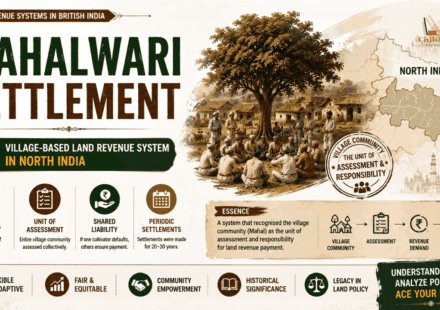
Mahalwari Settlement: Village-Based Land Revenue System in North India
The Mahalwari Settlement was the third major land revenue system introduced by the British in India. Proposed by Holt Mackenzie in 1822 and implemented extensively by Robert Merttins Bird during the administration of Lord William Bentinck, it was…
Read More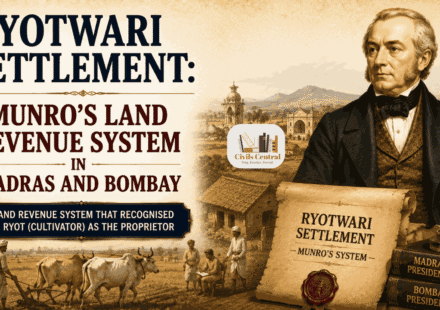
Ryotwari Settlement: Munro’s Land Revenue System in Madras and Bombay
The Ryotwari Settlement was one of the most important land revenue systems introduced by the British in India. Developed through the experiments of Alexander Read and later systematized by Sir Thomas Munro, it was implemented mainly in the Madras and…
Read More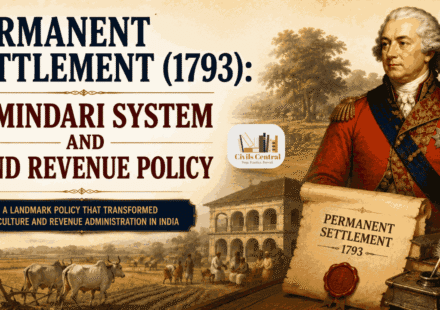
Permanent Settlement (1793): Zamindari System, Features, Objectives, Impact and Legacy
The Permanent Settlement of 1793, introduced by Lord Cornwallis with the assistance of Sir John Shore, was the first comprehensive land revenue system established by the British in India. Implemented in Bengal, Bihar, and parts of Odisha, it permanently…
Read More