
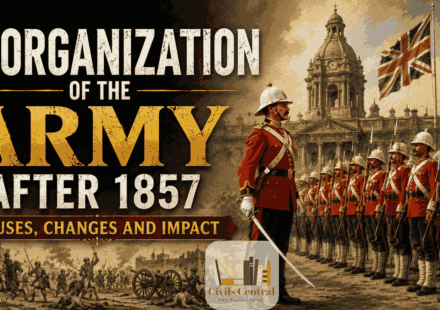
Reorganization of the Army after 1857: Causes, Changes and Impact

The Revolt of 1857 marked a turning point in the history of British rule in India. One of its most significant consequences was the complete restructuring of the Army, as the British realized that the existing military organization under the East India…
Read More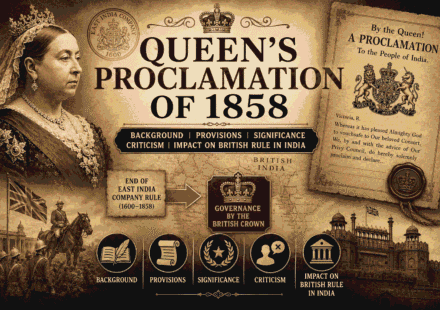
Queen’s Proclamation of 1858: Background, Provisions, Significance, Criticism and Impact on British Rule in India
The Queen's Proclamation of 1858, also known as Queen Victoria's Proclamation, was one of the most significant constitutional and administrative documents in the history of British India.
Read More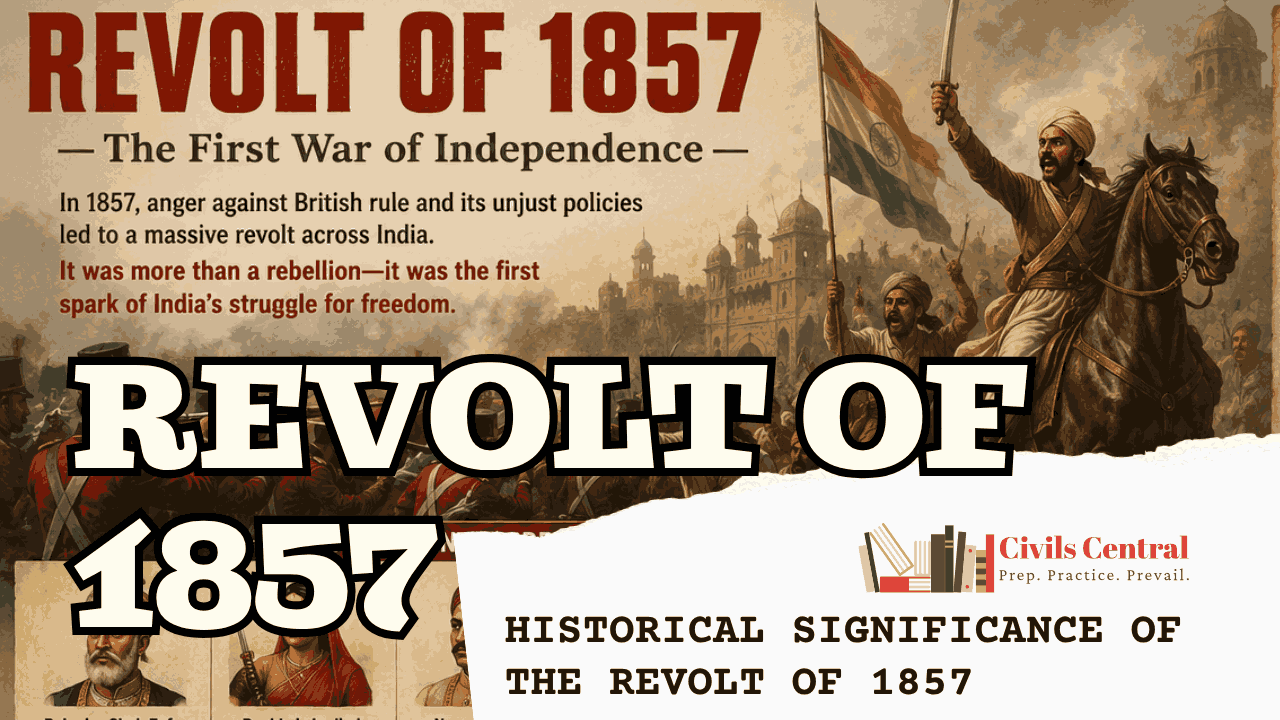
Historical Significance of the Revolt of 1857: Was it a Sepoy Mutiny, a Popular Revolt, or the First War of Independence?
Introduction The Revolt of 1857 occupies a unique and controversial place in Indian history. While its causes, events, and consequences have been extensively studied, historians continue to debate its true nature and historical significance. Was it…
Read More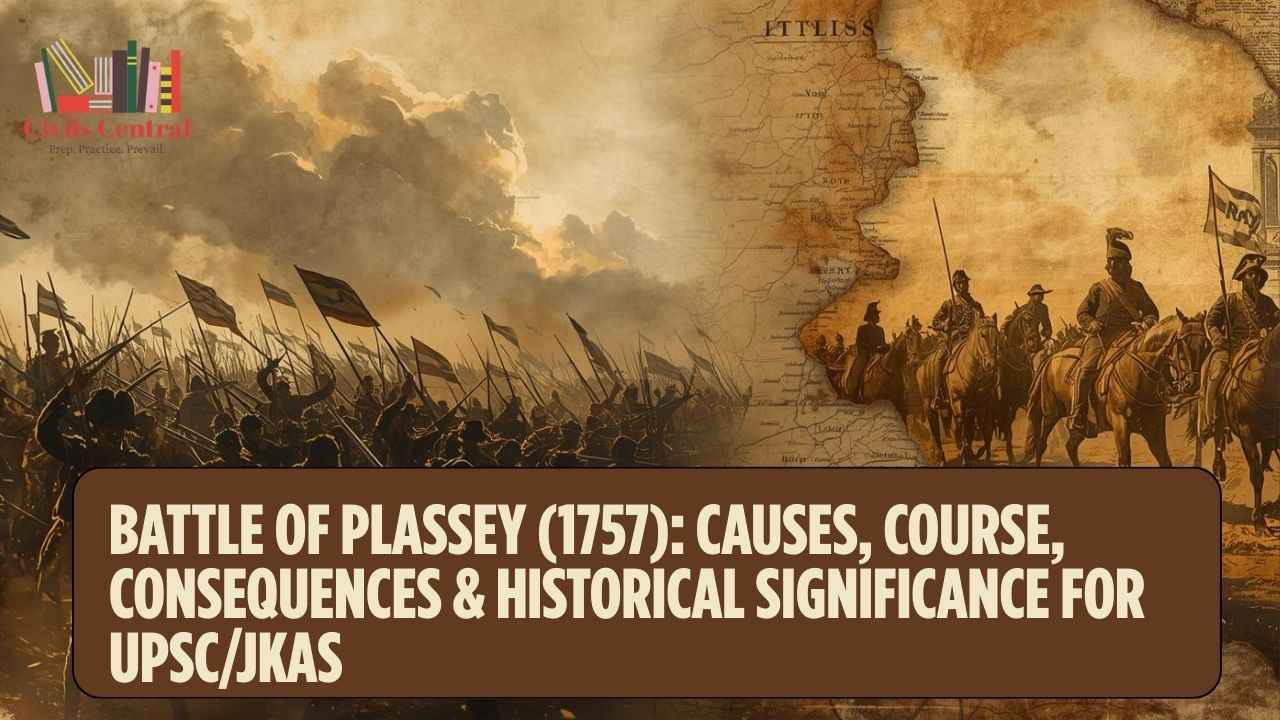
Battle of Plassey (1757): Causes, Course, Consequences & Historical Significance for UPSC/JKAS

Introduction The Battle of Plassey (23 June 1757) was a decisive event in Indian history that marked the beginning of British political dominance in India. Fought between the forces of the British East India Company under Robert Clive and the army of…
Read More
Mansabdari System under Akbar: Structure, Features, and Significance for UPSC/JKAS
Introduction The Mansabdari System was a unique administrative–military framework introduced by Akbar during the consolidation of the Mughal Empire in the 16th century. The term ‘Mansab’ literally means rank or position, and every officer (mansabdar) in…
Read More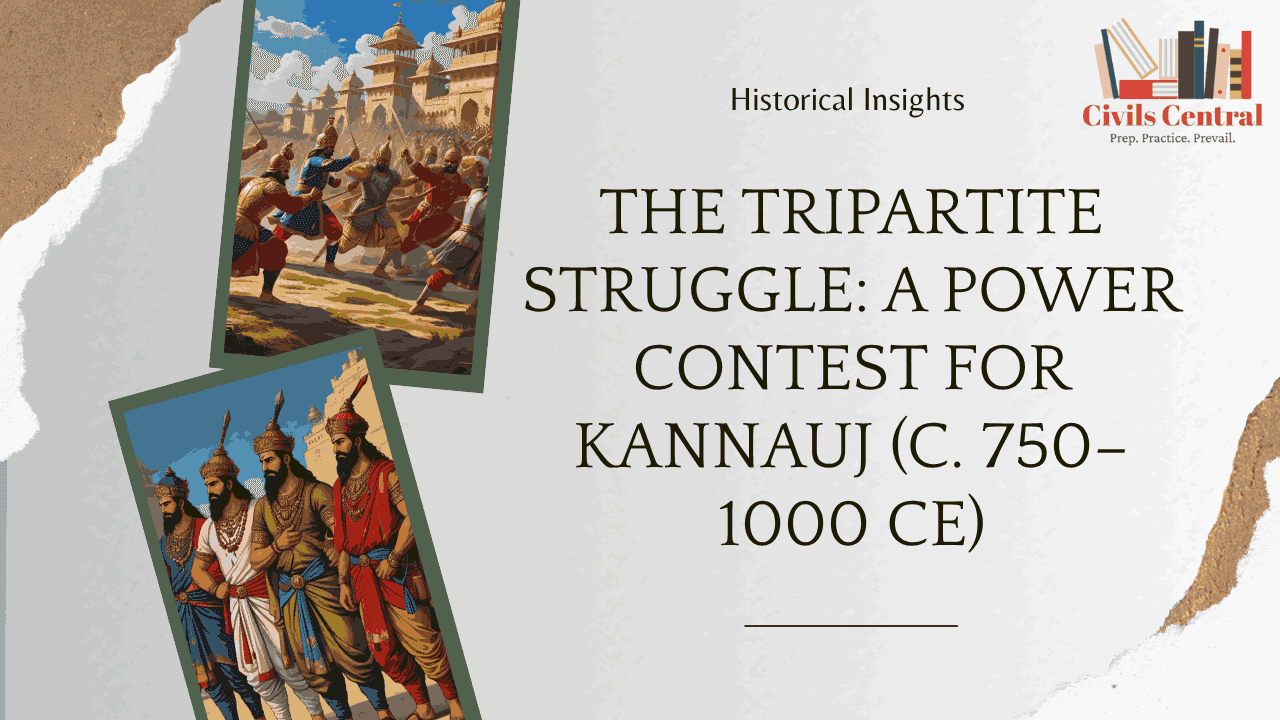
The Tripartite Struggle: A Power Contest for Kannauj (c. 750–1000 CE)
Introduction: Understanding the Fragmented Political Landscape The Tripartite Struggle, also known as the Kannauj Triangle War, was a prolonged military and political conflict during early medieval India, fought between three powerful dynasties — the…
Read More
Understanding the Rajput Era: Key Insights for UPSC Aspirants
Introduction The period from 750 to 1200 CE in Indian history marks the Early Medieval Period, a phase characterized by the rise of powerful regional kingdoms and political decentralization following the collapse of large pan-Indian empires like the…
Read More