Skip to content
-
Subscribe to our newsletter & never miss our best posts. Subscribe Now!
Civilscentral.com Civils Central

Prep.Practice.Prevail.

Civilscentral.com Civils Central

Prep.Practice.Prevail.

  • Home
  • History
    • Ancient History
    • Medieval History
  • Contact Us
  • About Us
  • Home
  • History
    • Ancient History
    • Medieval History
  • Contact Us
  • About Us
  • https://www.facebook.com/
  • https://twitter.com/
  • https://t.me/
  • https://www.instagram.com/
  • https://youtube.com/
Civilscentral.com Civils Central

Prep.Practice.Prevail.

Civilscentral.com Civils Central

Prep.Practice.Prevail.

  • Home
  • History
    • Ancient History
    • Medieval History
  • Contact Us
  • About Us
  • Home
  • History
    • Ancient History
    • Medieval History
  • Contact Us
  • About Us
  • https://www.facebook.com/
  • https://twitter.com/
  • https://t.me/
  • https://www.instagram.com/
  • https://youtube.com/
Home/Current Affairs/Mixopathy Debate in India – Health Ethics & Policy Issues
Concept of Mixopathy in Indian healthcare system
Current AffairsScience & Technology

Mixopathy Debate in India – Health Ethics & Policy Issues

By Rohit Thapa

🔷 Introduction

In recent years, the term “Mixopathy” has stirred debate within the Indian medical community and policy circles. It has been a trending topic in both parliamentary discussions and medical ethics debates, making it relevant for UPSC CSE and JKAS aspirants, especially under GS Paper II (Governance, Health) and Current Affairs.


🔷 What is Mixopathy?

Mixopathy refers to the integration or mixing of different systems of medicine, particularly:

  • Allopathy (Modern Medicine)
  • AYUSH systems – Ayurveda, Yoga & Naturopathy, Unani, Siddha, and Homeopathy.

This integration involves allowing practitioners of one medical system to practice aspects of another, such as Ayurvedic doctors performing surgeries or prescribing allopathic drugs.


🔷 Why is Mixopathy in the News?

  • NCISM Guidelines (2020-2021):
    The National Commission for Indian System of Medicine (NCISM) released guidelines allowing Ayurveda postgraduates to be trained for performing 58 surgical procedures traditionally conducted by allopathic doctors.
  • IMA Opposition:
    The Indian Medical Association (IMA) strongly opposed this, calling it an attack on scientific medicine and coining the term “Mixopathy”.
  • Legal and Ethical Debates:
    Petitions were filed in various courts, questioning the scientific validity, patient safety, and medical ethics of cross-practice.
  • NITI Aayog & Policy Support:
    NITI Aayog backed the integration, arguing that the shortage of trained allopathic doctors in rural areas could be mitigated through AYUSH integration.
  • NEET and Educational Integration:
    Proposals have emerged to unify entrance exams and even syllabi across different systems of medicine, further intensifying the debate.

🔷 Arguments For Mixopathy

  • ✅ Accessibility: Reduces the rural healthcare gap by empowering AYUSH practitioners.
  • ✅ Holistic Health: Integration can offer better chronic care, lifestyle modification, and preventive strategies.
  • ✅ Policy Support: Helps realize the National Health Policy 2017 goals of integrating modern and traditional systems.

🔷 Arguments Against Mixopathy

  • ❌ Patient Safety: Lack of scientific training in allopathy can lead to medical errors.
  • ❌ Medical Ethics: Cross-practice may violate the principles of specialization and competence.
  • ❌ Dilution of Standards: Risks lowering the quality of healthcare delivery.

🔷 Current Status (as of 2025)

  • The debate continues with various state governments adopting different approaches.
  • The Supreme Court has directed the government to clearly define the scope of practice for each stream.
  • NMC (National Medical Commission) and NCISM are working on clarity and guidelines for practitioners.

🔷 Relevance for UPSC & JKAS

  • Prelims:
    • Ministries involved (AYUSH, Health & Family Welfare)
    • Bodies like NCISM, NMC, IMA
    • Key reports like National Health Policy 2017
  • Mains:
    • GS II – Issues related to health, governance, regulatory bodies.
    • Ethics Paper – Medical ethics, autonomy, competence.
    • Essay – Health reforms in India.

FAQs

Q. What is Mixopathy?
Mixopathy is the integration of different systems of medicine such as Allopathy and AYUSH, allowing cross-practice.

Q. Why is Mixopathy controversial?
It raises concerns about patient safety, ethics, and quality of healthcare.

About The Author

Rohit Thapa

See author's posts

Tags:

AllopathyHealth Issues in IndiaIMAMixopathyNational Health PolicyNCISMNITI AayogUPSC Current Affairs
Author

Rohit Thapa

Follow Me
Other Articles
Professional woman working on a laptop with text announcing IBPS SO 2025 Specialist Officer vacancies – Civils Central notification banner
Previous

National Commission for Women (NCW) – UPSC & JKAS

“COP29 Azerbaijan logo representing the 2024 UN Climate Change Conference held in Baku”
Next

Paris Agreement & COP29 Explained: A Complete Guide for UPSC & JKAS Aspirants

No Comment! Be the first one.

    Leave a Reply Cancel reply

    Your email address will not be published. Required fields are marked *

    This site uses Akismet to reduce spam. Learn how your comment data is processed.

    Recent Posts

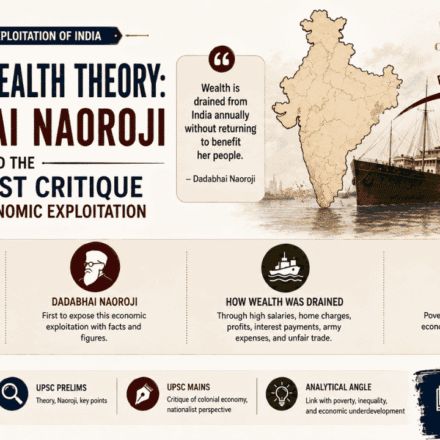
    • Drain of Wealth Theory: Dadabhai Naoroji and the Nationalist Critique of Colonial Economic Exploitation
    • Economic Impact of British Rule in India: Colonialism and the Transformation of the Indian Economy
    • Economic Impact of British Land Revenue Policies: Transformation of Agriculture and Rural Society in Colonial India
    • Mahalwari Settlement: Village-Based Land Revenue System in North India
    • Ryotwari Settlement: Munro’s Land Revenue System in Madras and Bombay

    Categories

    • Ancient History
    • Chapter 1.1
    • CivilsCentral Knowledge Library
    • Current Affairs
    • Defence
    • Disaster Management
    • Economics
    • Environment & Ecology
    • Exam Strategy
    • Finance
    • Geography
    • Governance
    • Government Schemes
    • International Organisations
    • International Relations
    • International Relations
    • Latest Notifications
    • Medieval History
    • Modern History
    • Physics
    • polity
    • Polity & Constitution
    • Science & Technology
    • Statutory Bodies
    • Uncategorized
    • UPSC

    RECENT POSTS

    • Drain of Wealth Theory: Dadabhai Naoroji and the Nationalist Critique of Colonial Economic Exploitation
    • Economic Impact of British Rule in India: Colonialism and the Transformation of the Indian Economy
    • Economic Impact of British Land Revenue Policies: Transformation of Agriculture and Rural Society in Colonial India
    • Mahalwari Settlement: Village-Based Land Revenue System in North India
    • Ryotwari Settlement: Munro’s Land Revenue System in Madras and Bombay
    • Ancient History (15)
    • Chapter 1.1 (1)
    • CivilsCentral Knowledge Library (2)
    • Current Affairs (53)
    • Defence (4)
    • Disaster Management (1)
    • Economics (5)
    • Environment & Ecology (10)
    • Exam Strategy (1)
    • Finance (3)
    • Geography (1)
    • Governance (16)
    • Government Schemes (2)
    • International Organisations (3)
    • International Relations (12)
    • International Relations (2)
    • Latest Notifications (1)
    • Medieval History (12)
    • Modern History (29)
    • Physics (1)
    • polity (1)
    • Polity & Constitution (8)
    • Science & Technology (8)
    • Statutory Bodies (1)
    • Uncategorized (4)
    • UPSC (36)

    Archives

    • August 2026
    • July 2026
    • June 2026
    • March 2026
    • February 2026
    • August 2025
    • July 2025
    • June 2025

    You May Have Missed

    Drain of Wealth Theory: Dadabhai Naoroji and the Nationalist Critique of Colonial Economic Exploitation
    Modern History UPSC

    Drain of Wealth Theory: Dadabhai Naoroji and the Nationalist Critique of Colonial Economic Exploitation

    Rohit Thapa
    By Rohit Thapa
    August 9, 2026
    Economic Impact of British Rule in India: Colonialism and the Transformation of the Indian Economy
    Modern History UPSC

    Economic Impact of British Rule in India: Colonialism and the Transformation of the Indian Economy

    Rohit Thapa
    By Rohit Thapa
    August 9, 2026
    Economic Impact of British Land Revenue Policies: Transformation of Agriculture and Rural Society in Colonial India
    Modern History UPSC

    Economic Impact of British Land Revenue Policies: Transformation of Agriculture and Rural Society in Colonial India

    Rohit Thapa
    By Rohit Thapa
    August 9, 2026
    Mahalwari Settlement: Village-Based Land Revenue System in North India
    Modern History UPSC

    Mahalwari Settlement: Village-Based Land Revenue System in North India

    Rohit Thapa
    By Rohit Thapa
    August 8, 2026
    Ryotwari Settlement: Munro's Land Revenue System in Madras and Bombay
    Modern History UPSC

    Ryotwari Settlement: Munro’s Land Revenue System in Madras and Bombay

    Rohit Thapa
    By Rohit Thapa
    August 7, 2026
    Permanent Settlement (1793): Zamindari System, Features, Objectives, Impact and Legacy
    Modern History UPSC

    Permanent Settlement (1793): Zamindari System, Features, Objectives, Impact and Legacy

    Rohit Thapa
    By Rohit Thapa
    August 5, 2026
    Lord Cornwallis (1786–1793): Administrative, Judicial and Revenue Reforms
    Modern History UPSC

    Lord Cornwallis (1786–1793): Administrative, Judicial and Revenue Reforms

    Rohit Thapa
    By Rohit Thapa
    August 5, 2026
    Pitt's India Act (1784): Dual Control and Parliamentary Supervision over the East India Company
    Modern History UPSC

    Pitt’s India Act (1784): Dual Control and Parliamentary Supervision over the East India Company

    Rohit Thapa
    By Rohit Thapa
    August 4, 2026
    Supreme Court at Calcutta (1774) and the Nand Kumar Case (1775): Beginning of the British Judicial System in India
    Modern History UPSC

    Supreme Court at Calcutta (1774) and the Nand Kumar Case (1775): Beginning of the British Judicial System in India

    Rohit Thapa
    By Rohit Thapa
    August 3, 2026
    Civilscentral.com
    • Drain of Wealth Theory: Dadabhai Naoroji and the Nationalist Critique of Colonial Economic Exploitation
    • Economic Impact of British Rule in India: Colonialism and the Transformation of the Indian Economy
    • Economic Impact of British Land Revenue Policies: Transformation of Agriculture and Rural Society in Colonial India
    • Mahalwari Settlement: Village-Based Land Revenue System in North India
    • Ryotwari Settlement: Munro’s Land Revenue System in Madras and Bombay
    • Drain of Wealth Theory: Dadabhai Naoroji and the Nationalist Critique of Colonial Economic Exploitation
    • Economic Impact of British Rule in India: Colonialism and the Transformation of the Indian Economy
    • Economic Impact of British Land Revenue Policies: Transformation of Agriculture and Rural Society in Colonial India
    • Mahalwari Settlement: Village-Based Land Revenue System in North India
    • Ryotwari Settlement: Munro’s Land Revenue System in Madras and Bombay
    Copyright 2026 — Civils Central. All rights reserved.