
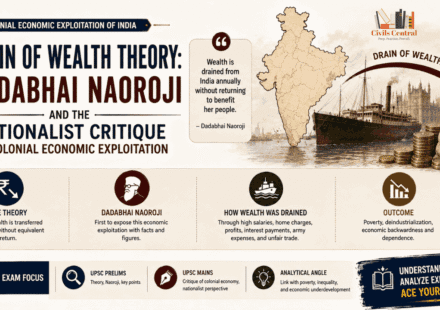
Drain of Wealth Theory: Dadabhai Naoroji and the Nationalist Critique of Colonial Economic Exploitation

The Drain of Wealth Theory developed by Dadabhai Naoroji provided Indian nationalism with a systematic economic critique of British rule. It argued that Indian resources were transferred to Britain through Home Charges, salaries, pensions, remittances,…
Read More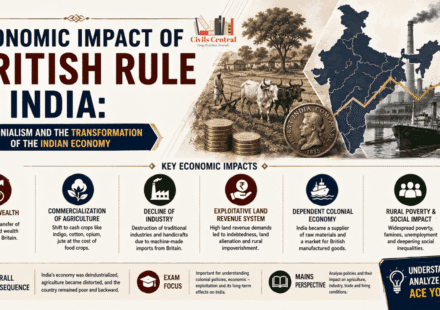
Economic Impact of British Rule in India: Colonialism and the Transformation of the Indian Economy
British rule fundamentally transformed India's economy by reorganising agriculture, weakening traditional industries, expanding raw-material exports, increasing imports of British manufactured goods and developing infrastructure for imperial trade. The…
Read More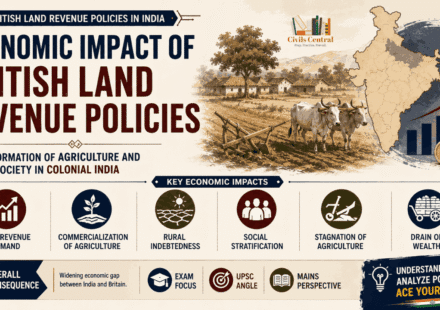
Economic Impact of British Land Revenue Policies: Transformation of Agriculture and Rural Society in Colonial India
British land revenue policies transformed India's agrarian economy by reorganising land rights, strengthening colonial fiscal control, monetising rural obligations and encouraging commercialisation of agriculture. The Permanent, Ryotwari and Mahalwari…
Read More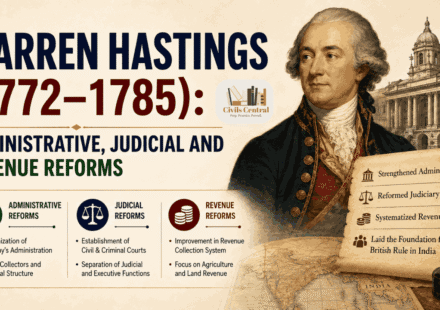
Warren Hastings (1772–1785): Administrative, Judicial and Revenue Reforms
Warren Hastings (1772–1785) was the first Governor-General of Bengal and is widely regarded as the architect of early British administration in India. During his tenure, he abolished the Dual Government, reorganized the revenue system, introduced the…
Read More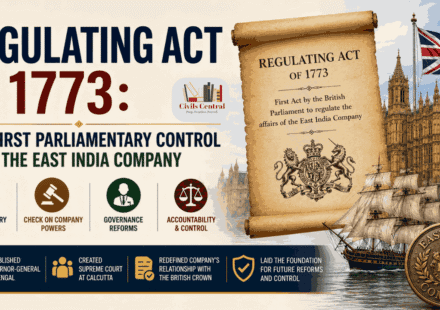
Regulating Act 0f 1773 : The First Parliamentary Control over the East India Company
The Regulating Act 0f 1773 was the first major constitutional measure passed by the British Parliament to regulate the administration of the English East India Company in India. Enacted in response to corruption, administrative failures, the Great Bengal…
Read More
Reorganization of the Army after 1857: Causes, Changes and Impact
The Revolt of 1857 marked a turning point in the history of British rule in India. One of its most significant consequences was the complete restructuring of the Army, as the British realized that the existing military organization under the East India…
Read More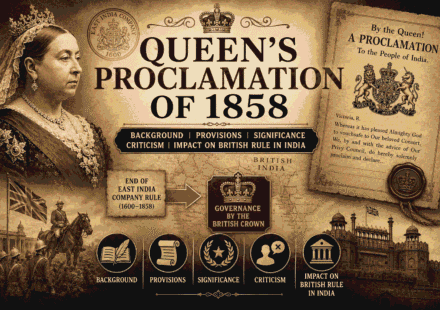
Queen’s Proclamation of 1858: Background, Provisions, Significance, Criticism and Impact on British Rule in India
The Queen's Proclamation of 1858, also known as Queen Victoria's Proclamation, was one of the most significant constitutional and administrative documents in the history of British India.
Read More
Government of India Act, 1858: Features, Objectives, Impact and Historical Significance
The Government of India Act, 1858 was a landmark legislation passed by the British Parliament that fundamentally transformed the system of governance in India. Enacted in the aftermath of the Revolt of 1857, the Act abolished the rule of the East India…
Read More
Charter Act of 1853: Features, Significance, Impact on British Administration | UPSC/JKAS
Introduction The Charter Act of 1853 was one of the most important constitutional developments during British rule in India. Passed by the British Parliament, the Act introduced major administrative and legislative reforms in the governance of India…
Read More
Charter Act of 1833: Features, Significance, Impact on British Administration (UPSC/JKAS)
Introduction The Charter Act of 1833 was one of the most significant constitutional measures passed by the British Parliament to reorganize the administration of British India under the rule of the British East India Company. Enacted during the reign of…
Read More