Skip to content
-
Subscribe to our newsletter & never miss our best posts. Subscribe Now!
Civilscentral.com Civils Central

Prep.Practice.Prevail.

Civilscentral.com Civils Central

Prep.Practice.Prevail.

  • Home
  • History
    • Ancient History
    • Medieval History
  • Contact Us
  • About Us
  • Home
  • History
    • Ancient History
    • Medieval History
  • Contact Us
  • About Us
  • https://www.facebook.com/
  • https://twitter.com/
  • https://t.me/
  • https://www.instagram.com/
  • https://youtube.com/
Civilscentral.com Civils Central

Prep.Practice.Prevail.

Civilscentral.com Civils Central

Prep.Practice.Prevail.

  • Home
  • History
    • Ancient History
    • Medieval History
  • Contact Us
  • About Us
  • Home
  • History
    • Ancient History
    • Medieval History
  • Contact Us
  • About Us
  • https://www.facebook.com/
  • https://twitter.com/
  • https://t.me/
  • https://www.instagram.com/
  • https://youtube.com/
Home/Current Affairs/Article 143: A Powerful Legal Tool and Why It’s in the News – Explained for UPSC/JKAS Aspirants
Professional blog image with a law and justice theme, featuring scales of justice, formal layout, and clean typography—designed for a legal article titled “Article 143: A Powerful Legal Tool”
Current AffairsPolity & Constitution

Article 143: A Powerful Legal Tool and Why It’s in the News – Explained for UPSC/JKAS Aspirants

By Rohit Thapa

1. Introduction to Article 143

The Indian Constitution empowers the President of India with the unique right to seek the Supreme Court’s opinion on important questions of law or fact that impact public interest. This power is granted under Article 143, which plays a crucial role in clarifying complex legal dilemmas before they become contentious issues.

Article 143 is part of the advisory jurisdiction of the Supreme Court. While the opinions given under this provision are not binding, they are treated with great constitutional respect and are considered authoritative.


2. What Does Article 143 Say?

Article 143 has two main clauses:

  • Clause (1): The President can refer any matter of public importance to the Supreme Court for its opinion.
  • Clause (2): The President must refer any issue related to pre-Constitution treaties and agreements to the Court.

The Supreme Court may choose to offer an opinion—or it can decline to do so if it finds the matter inappropriate or too political in nature.


3. Judicial vs. Advisory Jurisdiction

The judicial jurisdiction of the Supreme Court is binding and enforceable, but its advisory jurisdiction, especially under Article 143, is only consultative. However, these opinions are often followed by other authorities due to the Court’s high credibility.

Importantly, the Court is not obligated to respond to every reference. For example, it declined to respond in the Ayodhya case of 1993, considering the issue to be political and not legal.


4. Constitutional Safeguards: Article 145(3)

To maintain the sanctity of Article 143 opinions, the Constitution mandates that such references must be heard by a Constitution Bench of at least five judges. This ensures that only the most experienced and senior judges deliberate on these sensitive questions.


5. Important Past Cases Under Article 143

Several landmark cases have invoked Article 143:

  • Delhi Laws Act (1951) – First-ever Presidential reference to test the limits of delegated legislation.
  • Berubari Union Case (1960) – On the transfer of Indian territory to Pakistan.
  • Third Judges Case (1998) – Clarified the process for appointment of judges, leading to the present-day Collegium system.
  • 2G Spectrum and Natural Resources Cases – Provided clarity on allocation of national assets.

These references reflect the wide scope of Article 143 and its significance in maintaining constitutional clarity.


6. Recent Tamil Nadu Governor Case (April 2025)

In April 2025, the Supreme Court ruled that Governors cannot delay state bills indefinitely. This was in response to multiple bills passed by the Tamil Nadu Assembly being withheld for extended periods by the Governor. The Court emphasized that the Governor must act “as soon as possible” and cannot use silence as a veto.

This judgment stirred nationwide debate, especially regarding federal relations and the limits of gubernatorial power.


7. Why Article 143 Is in the News Now

Following the April 2025 verdict, the President of India sent a reference to the Supreme Court under Article 143 to seek clarity on multiple legal questions. These include:

  • Whether the Supreme Court can set deadlines for Governors or the President to act on bills.
  • Whether the lack of action by a Governor can result in deemed assent.
  • If such judicial directives infringe upon executive powers outlined in Articles 200 and 201.

The reference raised 14 detailed legal questions, all of which are being heard by a Constitution Bench.


8. Supreme Court Proceedings and Legal Implications

The Supreme Court responded by issuing notices to the Central Government and all states. The Court is expected to clarify whether it has the constitutional authority to impose timelines on the executive branch and whether such directions are judicial overreach.

This case will likely redefine the balance of power between the judiciary, executive, and the states, making it extremely relevant for civil service exam aspirants.


9. Federal and Political Reactions

Political leaders, especially from opposition-ruled states like Tamil Nadu, have criticized the reference. They argue that it undermines the spirit of cooperative federalism and allows Governors to bypass democratically elected legislatures.

On the other hand, supporters of the reference believe it seeks to maintain constitutional discipline and ensure that state bills are reviewed in a time-bound manner.


10. Why It Matters for UPSC/JKAS Aspirants

This issue touches upon multiple important themes in Indian polity:

  • Separation of powers
  • Judicial activism vs. restraint
  • Centre–State relations
  • Governor’s discretionary powers
  • Constitutional remedies under Article 142

These are all potential question areas for GS Paper II, Ethics Case Studies, and Essay Paper in UPSC and JKAS exams.


11. Frequently Asked Questions (FAQ)

Q1: Is the Supreme Court’s opinion under Article 143 binding?
No, it is advisory and non-binding, but carries high legal and moral weight.

Q2: Can the Supreme Court refuse a Presidential reference?
Yes, the Court can decline if it finds the matter politically sensitive or legally vague.

Q3: What is the difference between Article 143(1) and 143(2)?
Clause (1) allows the President to refer any issue of public importance. Clause (2) mandates referral of disputes about pre-constitutional treaties.

Q4: Why did President Murmu invoke Article 143 in 2025?
To seek clarity on whether the judiciary can impose timelines on Governors regarding assent to state bills.

Q5: How does this reference affect federalism?
It tests the limits of judicial power over executive discretion and may reset Centre–State dynamics.

Q6: What topics should aspirants focus on for this issue?
Focus on Articles 143, 142, 145(3), 200, 201, separation of powers, constitutional interpretation, and judicial review.


12. Conclusion

Article 143 serves as a bridge between the Executive and Judiciary, ensuring constitutional issues are addressed before they become crises. The 2025 reference has re-ignited the debate around judicial activism, executive discretion, and legislative autonomy. For aspirants, this case offers a rare, real-time example of how India’s democratic institutions engage with each other to uphold the Constitution.


🗞 Top News Highlights (July 25, 2025)

  • Supreme Court begins hearings on Article 143 reference by President Murmu.
  • Constitution Bench issues notices to Centre and 28 states.
  • Tamil Nadu CM criticizes the Presidential reference as unconstitutional.
  • Debate intensifies on whether timelines for Governors are judicial overreach or necessary clarification.
  • Supreme Court likely to deliver opinion before Winter Session of Parliament.

📢 Stay Ahead in UPSC/JKAS Preparation!
Join our Telegram Channel – Civils Central for daily updates, current affairs, and answer writing practice:
👉 https://t.me/civilscentral

About The Author

Rohit Thapa

See author's posts

Tags:

#Article143#CivilsCentral#CurrentAffairs2025#FederalismInIndia#GovernorsPowers#IASAspirants#IndianConstitution#IndianJudiciary#JKAS2025#JKASAspirants#JKASPolity#PolityUPSC#PresidentialReference#SeparationOfPowers#SupremeCourtIndia#UPSC2025#UPSCMains2025#UPSCNotes#UPSCPolity#UPSCPrelims2025
Author

Rohit Thapa

Follow Me
Other Articles
“Formal graphic for Indian Vice-President with tricolor theme and Parliament silhouette background.”
Previous

Resignation of the Vice-President of India: Constitutional Process & Key Insights for UPSC

Map highlighting BIMSTEC countries with India at the center, symbolizing regional diplomacy and strategic leadership for UPSC/JKAS exam guide.
Next

BIMSTEC: Strategic Bridge for India’s Regional Leadership – UPSC/JKAS Must-Read Guide

No Comment! Be the first one.

Leave a Reply Cancel reply

Your email address will not be published. Required fields are marked *

This site uses Akismet to reduce spam. Learn how your comment data is processed.

Recent Posts

  • Election Commission of India 2026: Internal Dissent, Electoral Rolls, SIR, Form 6 and Institutional Independence
  • India–US Relations 2026: Trade, Defence, Technology, QUAD and Strategic Challenges
  • Merchant Discount Rate (MDR): New UPI Framework 2026, How It Works, Who Pays and Why It Matters
  • BRICS Summit 2026: India’s Chairship, New Delhi Declaration and the Future of Global South Cooperation
  • Maratha Expansion and the Rise of the Peshwas (1707–1761): From Shahu to the Third Battle of Panipat

Categories

  • Ancient History
  • Chapter 1.1
  • CivilsCentral Knowledge Library
  • Current Affairs
  • Defence
  • Disaster Management
  • Economics
  • Environment & Ecology
  • Exam Strategy
  • Finance
  • Geography
  • Governance
  • Government Schemes
  • International Organisations
  • International Relations
  • International Relations
  • Latest Notifications
  • Medieval History
  • Modern History
  • Physics
  • polity
  • Polity & Constitution
  • Science & Technology
  • Statutory Bodies
  • Uncategorized
  • UPSC

RECENT POSTS

  • Election Commission of India 2026: Internal Dissent, Electoral Rolls, SIR, Form 6 and Institutional Independence
  • India–US Relations 2026: Trade, Defence, Technology, QUAD and Strategic Challenges
  • Merchant Discount Rate (MDR): New UPI Framework 2026, How It Works, Who Pays and Why It Matters
  • BRICS Summit 2026: India’s Chairship, New Delhi Declaration and the Future of Global South Cooperation
  • Maratha Expansion and the Rise of the Peshwas (1707–1761): From Shahu to the Third Battle of Panipat
  • Ancient History (15)
  • Chapter 1.1 (1)
  • CivilsCentral Knowledge Library (2)
  • Current Affairs (57)
  • Defence (4)
  • Disaster Management (1)
  • Economics (5)
  • Environment & Ecology (10)
  • Exam Strategy (1)
  • Finance (3)
  • Geography (1)
  • Governance (18)
  • Government Schemes (2)
  • International Organisations (3)
  • International Relations (14)
  • International Relations (2)
  • Latest Notifications (1)
  • Medieval History (12)
  • Modern History (33)
  • Physics (1)
  • polity (1)
  • Polity & Constitution (9)
  • Science & Technology (9)
  • Statutory Bodies (1)
  • Uncategorized (4)
  • UPSC (40)

Archives

  • September 2026
  • August 2026
  • July 2026
  • June 2026
  • March 2026
  • February 2026
  • August 2025
  • July 2025
  • June 2025

You May Have Missed

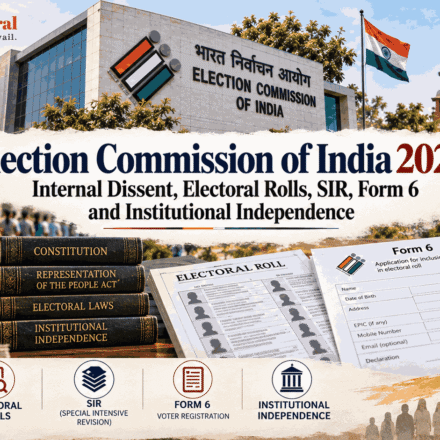
Election Commission of India 2026 Internal Dissent, Electoral Rolls, SIR, Form 6 and Institutional Independence
Current Affairs Governance Polity & Constitution

Election Commission of India 2026: Internal Dissent, Electoral Rolls, SIR, Form 6 and Institutional Independence

Rohit Thapa
By Rohit Thapa
September 24, 2026
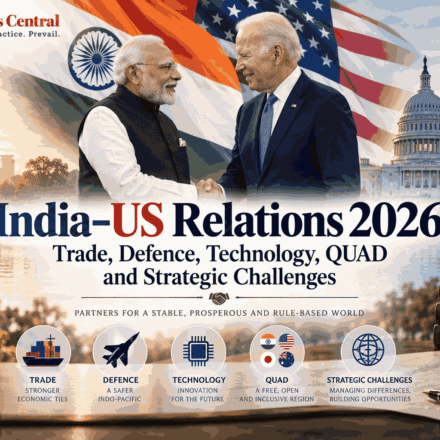
India–US Relations 2026 Trade, Defence, Technology, QUAD and Strategic Challenges
Current Affairs International Relations

India–US Relations 2026: Trade, Defence, Technology, QUAD and Strategic Challenges

Rohit Thapa
By Rohit Thapa
September 17, 2026
Merchant Discount Rate (MDR) 2026 UPI Charges, 0.4% MDR, P2M, P2P & UPSC Notes
Current Affairs Governance Science & Technology

Merchant Discount Rate (MDR): New UPI Framework 2026, How It Works, Who Pays and Why It Matters

Rohit Thapa
By Rohit Thapa
September 17, 2026
BRICS Summit 2026 India’s Chairship, New Delhi Declaration and the Future of Global South Cooperation
Current Affairs International Relations

BRICS Summit 2026: India’s Chairship, New Delhi Declaration and the Future of Global South Cooperation

Rohit Thapa
By Rohit Thapa
September 16, 2026
Maratha Expansion and the Rise of the Peshwas (1707–1761): From Shahu to the Third Battle of Panipat
Modern History UPSC

Maratha Expansion and the Rise of the Peshwas (1707–1761): From Shahu to the Third Battle of Panipat

Rohit Thapa
By Rohit Thapa
September 10, 2026
Lord Wellesley (1798–1805) Subsidiary Alliance, British Expansion and the Rise of Paramountcy
Modern History UPSC

Lord Wellesley (1798–1805): Subsidiary Alliance, British Expansion and the Rise of Paramountcy

Rohit Thapa
By Rohit Thapa
September 7, 2026
Anglo-Maratha Wars (1775–1818): British Expansion and the Decline of Maratha Power
Modern History UPSC

Anglo-Maratha Wars (1775–1818): British Expansion and the Decline of Maratha Power

Rohit Thapa
By Rohit Thapa
September 3, 2026
Anglo-Mysore Wars (1767–1799): Mysore, Haider Ali, Tipu Sultan and the Expansion of British Power
Modern History UPSC

Anglo-Mysore Wars (1767–1799): Mysore, Haider Ali, Tipu Sultan and the Expansion of British Power

Rohit Thapa
By Rohit Thapa
September 3, 2026
Drain of Wealth Theory: Dadabhai Naoroji and the Nationalist Critique of Colonial Economic Exploitation
Modern History UPSC

Drain of Wealth Theory: Dadabhai Naoroji and the Nationalist Critique of Colonial Economic Exploitation

Rohit Thapa
By Rohit Thapa
August 9, 2026
Civilscentral.com
  • Election Commission of India 2026: Internal Dissent, Electoral Rolls, SIR, Form 6 and Institutional Independence
  • India–US Relations 2026: Trade, Defence, Technology, QUAD and Strategic Challenges
  • Merchant Discount Rate (MDR): New UPI Framework 2026, How It Works, Who Pays and Why It Matters
  • BRICS Summit 2026: India’s Chairship, New Delhi Declaration and the Future of Global South Cooperation
  • Maratha Expansion and the Rise of the Peshwas (1707–1761): From Shahu to the Third Battle of Panipat
  • Election Commission of India 2026: Internal Dissent, Electoral Rolls, SIR, Form 6 and Institutional Independence
  • India–US Relations 2026: Trade, Defence, Technology, QUAD and Strategic Challenges
  • Merchant Discount Rate (MDR): New UPI Framework 2026, How It Works, Who Pays and Why It Matters
  • BRICS Summit 2026: India’s Chairship, New Delhi Declaration and the Future of Global South Cooperation
  • Maratha Expansion and the Rise of the Peshwas (1707–1761): From Shahu to the Third Battle of Panipat
Copyright 2026 — Civils Central. All rights reserved.