
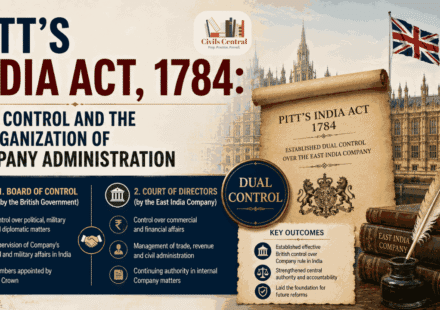
Pitt’s India Act (1784): Dual Control and Parliamentary Supervision over the East India Company

Pitt's India Act (1784) was one of the most significant constitutional reforms in the history of British India. Enacted under the leadership of William Pitt the Younger, the Act transformed the relationship between the British Government and the East…
Read More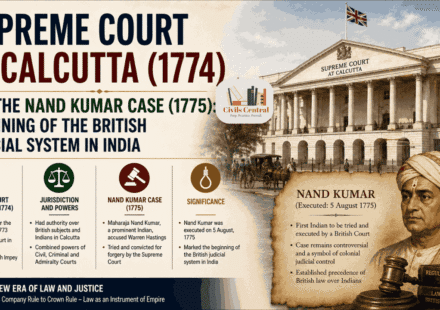
Supreme Court at Calcutta (1774) and the Nand Kumar Case (1775): Beginning of the British Judicial System in India
The Supreme Court at Calcutta (1774) was the first superior court established by the British Crown in India under the Regulating Act of 1773. It introduced an independent judiciary, English common law, and professional judges into British India. However,…
Read More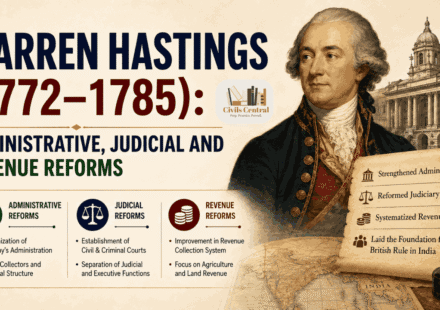
Warren Hastings (1772–1785): Administrative, Judicial and Revenue Reforms
Warren Hastings (1772–1785) was the first Governor-General of Bengal and is widely regarded as the architect of early British administration in India. During his tenure, he abolished the Dual Government, reorganized the revenue system, introduced the…
Read More
Pitt’s India Act, 1784: Features, Significance & Impact on British Administration (UPSC/JKAS)

Introduction The Pitt’s India Act of 1784 marked a decisive stage in the constitutional evolution of British rule in India. Enacted by the British Parliament under Prime Minister William Pitt the Younger, the Act was passed to rectify the administrative…
Read More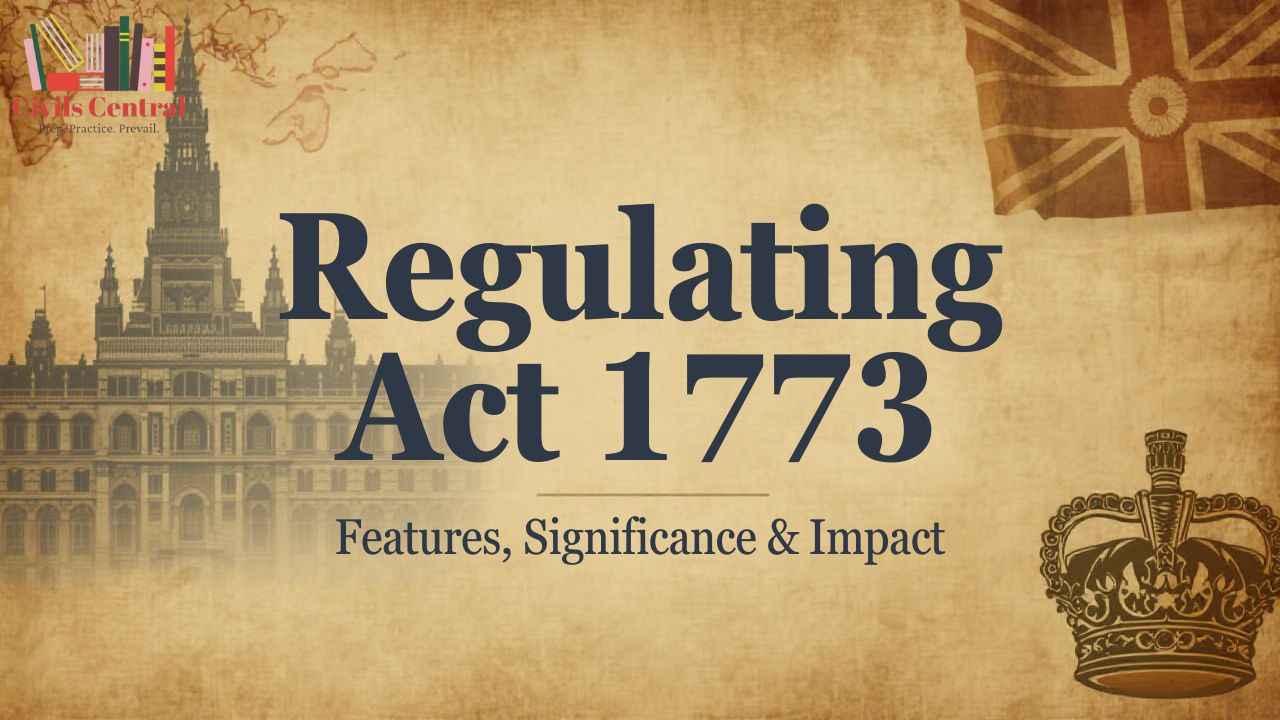
Regulating Act of 1773: Features, Significance & Impact on British Administration
Introduction The Regulating Act of 1773 marked the first direct intervention of the British Parliament in the affairs of the East India Company in India. Enacted during the reign of George III, the Act was passed by the British Parliament under the…
Read More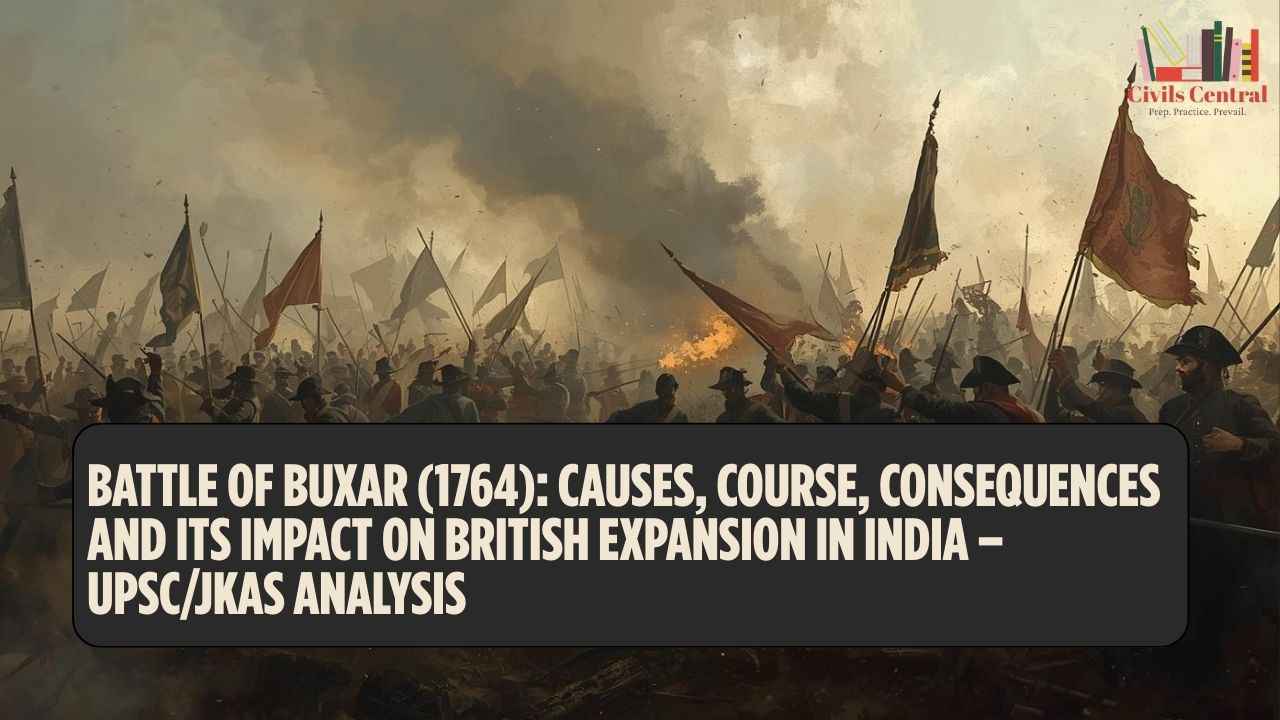
Battle of Buxar (1764): Causes, Course, Consequences & Historical Significance for UPSC/JKAS
Introduction The Battle of Buxar (23 October 1764) was one of the most decisive battles in modern Indian history, fought between the British East India Company and a powerful Indian alliance comprising Shah Alam II, Shuja-ud-Daula, and Mir Qasim. The…
Read More