
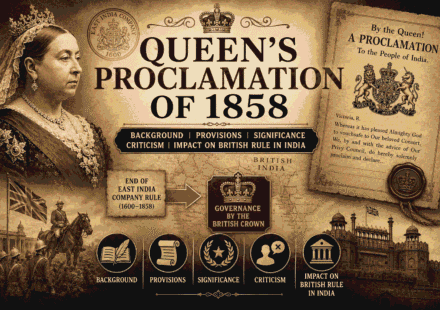
Queen’s Proclamation of 1858: Background, Provisions, Significance, Criticism and Impact on British Rule in India

The Queen's Proclamation of 1858, also known as Queen Victoria's Proclamation, was one of the most significant constitutional and administrative documents in the history of British India.
Read More
Government of India Act, 1858: Features, Objectives, Impact and Historical Significance
The Government of India Act, 1858 was a landmark legislation passed by the British Parliament that fundamentally transformed the system of governance in India. Enacted in the aftermath of the Revolt of 1857, the Act abolished the rule of the East India…
Read More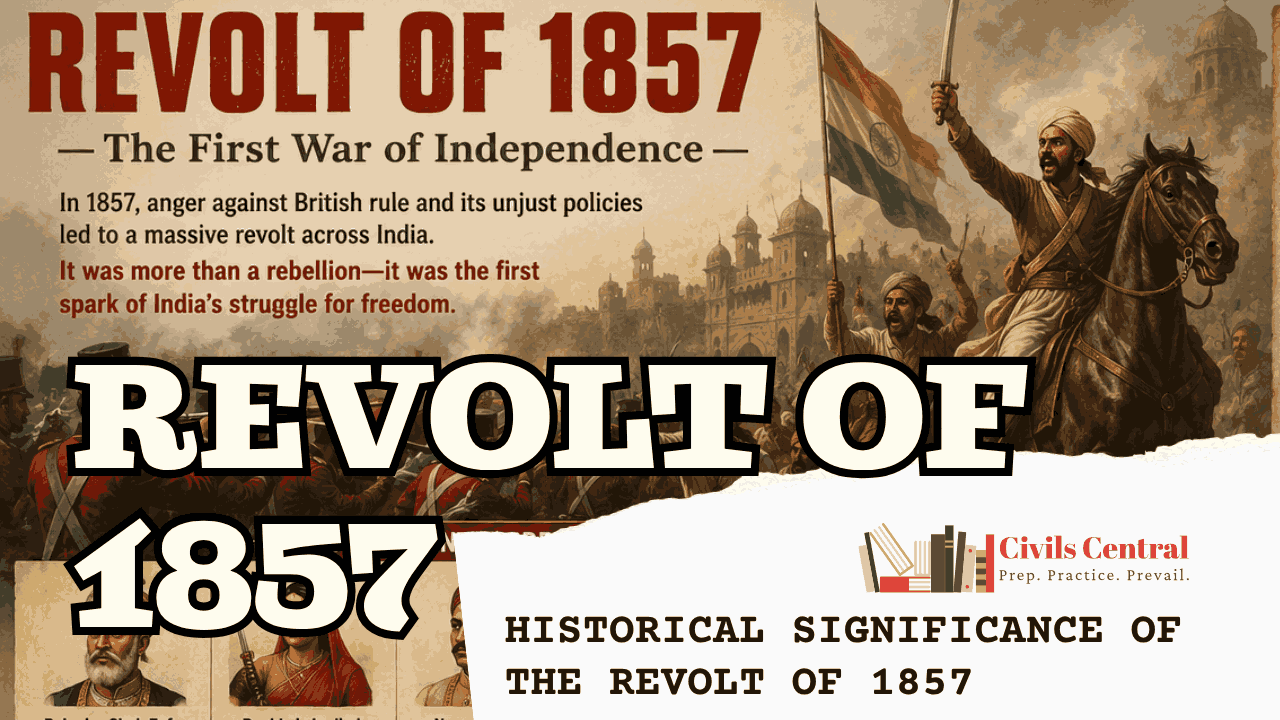
Historical Significance of the Revolt of 1857: Was it a Sepoy Mutiny, a Popular Revolt, or the First War of Independence?
Introduction The Revolt of 1857 occupies a unique and controversial place in Indian history. While its causes, events, and consequences have been extensively studied, historians continue to debate its true nature and historical significance. Was it…
Read More
Charter Act of 1853: Features, Significance, Impact on British Administration | UPSC/JKAS
Introduction The Charter Act of 1853 was one of the most important constitutional developments during British rule in India. Passed by the British Parliament, the Act introduced major administrative and legislative reforms in the governance of India…
Read More
Charter Act of 1833: Features, Significance, Impact on British Administration (UPSC/JKAS)
Introduction The Charter Act of 1833 was one of the most significant constitutional measures passed by the British Parliament to reorganize the administration of British India under the rule of the British East India Company. Enacted during the reign of…
Read More
The Delhi Sultanate (1206–1526): Political, Social, and Cultural Developments
An in-depth analysis of the political, social, and cultural transformation during the Delhi Sultanate period that shaped medieval Indian history. Introduction The Delhi Sultanate (1206–1526 CE) marks a pivotal and transformative phase in Indian history,…
Read More
India and the Arab-Turkic Invasions (712–1206 CE)
Prelude to the Delhi Sultanate 📘 1. Introduction: India on the Eve of Islamic Invasions 🏴 2. Arab Invasion of Sindh (712 CE) ⚔️ 3. Mahmud of Ghazni (997–1030 CE) ⚔️ 4. Muhammad Ghori and the Ghurid Invasions (1175–1206 CE) 🏰 5. Causes of Turkish Success…
Read More