

The Delhi Sultanate (1206–1526): Political, Social, and Cultural Developments

An in-depth analysis of the political, social, and cultural transformation during the Delhi Sultanate period that shaped medieval Indian history. Introduction The Delhi Sultanate (1206–1526 CE) marks a pivotal and transformative phase in Indian history,…
Read More
Panama Treaty and Why It Was in the News – Complete Guide for UPSC/JKAS Aspirants
Introduction to the Panama Treaty The Panama Treaty, often referred to in the plural as the Panama Canal Treaties, represents a turning point in 20th-century geopolitics and international diplomacy. Signed in 1977 between the United States and Panama,…
Read More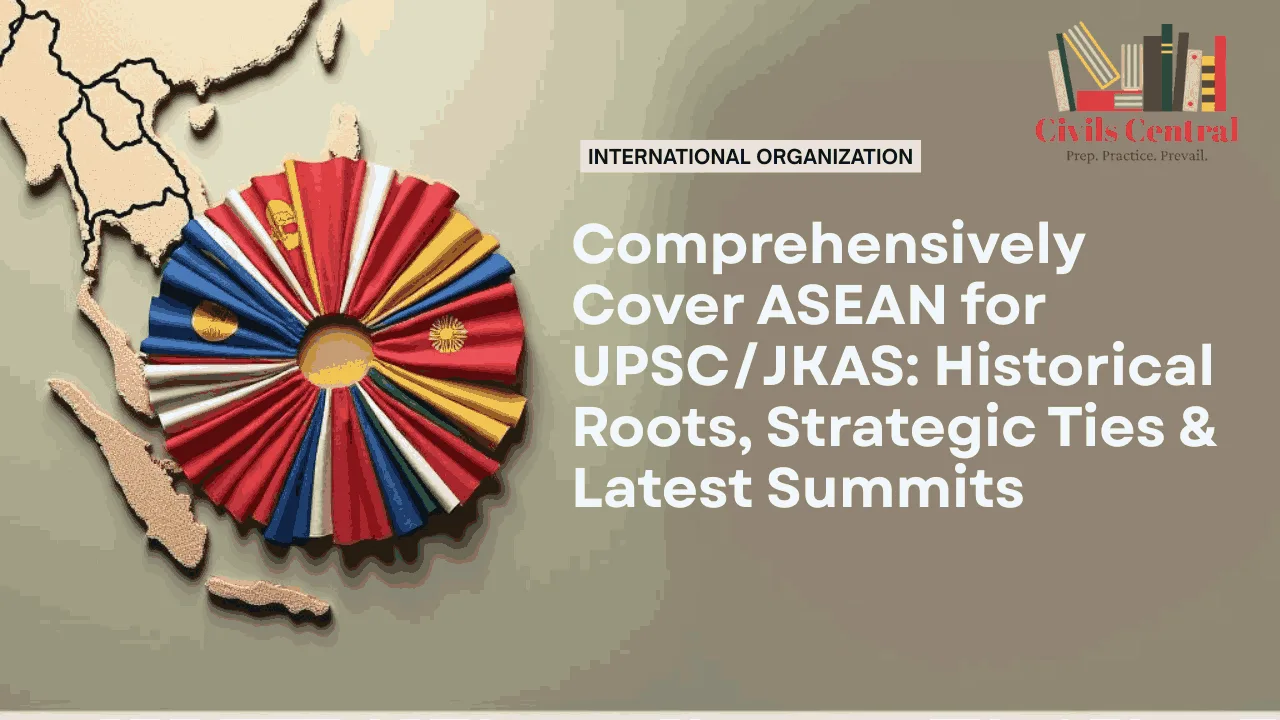
Comprehensively Cover ASEAN for UPSC/JKAS: Historical Roots, Strategic Ties & Latest Summits
Introduction to ASEAN The Association of Southeast Asian Nations (ASEAN) is not just a regional bloc—it is a strategic fulcrum in today’s rapidly evolving Indo-Pacific geopolitical landscape. Formed in 1967 with the aim of promoting regional peace,…
Read More
BIMSTEC: Strategic Bridge for India’s Regional Leadership – UPSC/JKAS Must-Read Guide
Introduction to BIMSTEC The Bay of Bengal Initiative for Multi-Sectoral Technical and Economic Cooperation (BIMSTEC) is a regional organization comprising seven countries from South and Southeast Asia. These include Bangladesh, Bhutan, India, Myanmar,…
Read More
Article 143: A Powerful Legal Tool and Why It’s in the News – Explained for UPSC/JKAS Aspirants
1. Introduction to Article 143 The Indian Constitution empowers the President of India with the unique right to seek the Supreme Court’s opinion on important questions of law or fact that impact public interest. This power is granted under Article 143,…
Read More
Resignation of the Vice-President of India: Constitutional Process & Key Insights for UPSC
🧭 Introduction – Vice‑President The Vice-President of India is the second-highest constitutional office after the President. This office is a part of the Indian parliamentary framework, primarily serving as the Ex-officio Chairman of the Rajya…
Read More
V.V. Giri’s 1969 Resignation: A Landmark in Constitutional Morality and Political Transformation
🔰 Introduction – V.V. Giri’s 1969 resignation The resignation of V.V. Giri as Vice-President of India in 1969 is more than a procedural event — it is a remarkable instance of constitutional propriety, political foresight, and ethical conduct. At a…
Read More
GEAC Amendment & GM Crop Policy: A Must-Know Topic for UPSC/JKAS 2025
Introduction – Why this Topic Matters for UPSC/JKAS In July 2024, the Union Ministry of Environment, Forest and Climate Change amended rules related to expert selection for the Genetic Engineering Appraisal Committee (GEAC). This seemingly small…
Read More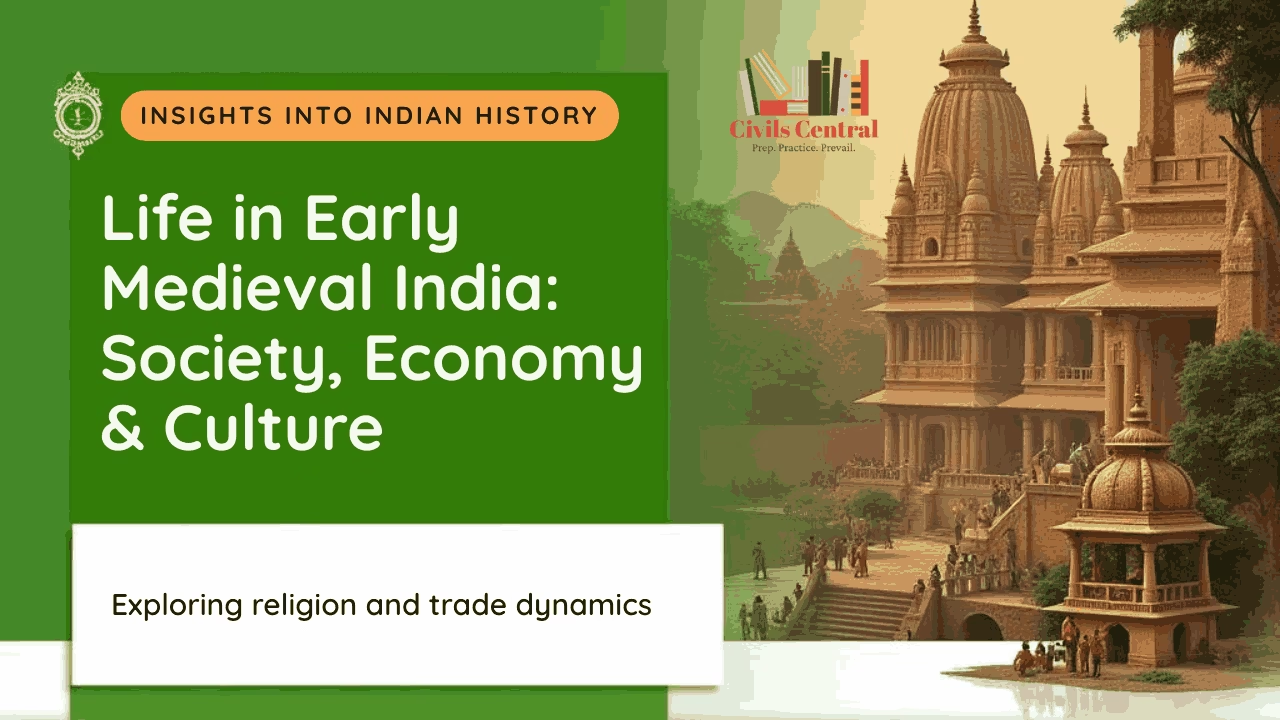
Life in Early Medieval India (600–1200 CE): Society, Economy, Religion & Culture
👉 An analytical overview of India’s transformation after the fall of the Gupta Empire — the rise of regional powers and the socio-economic and cultural evolution that laid the foundation of medieval India. I. 🧬 Social Structure: From Varna to Jati 1.…
Read More
Other Dynasties of Early Medieval India: Regional Powers and Cultural Contributors (9th–13th Century CE)
📘 Medieval Indian History Series Previously in this series: Imperial Cholas: Maritime Power and Temple Grandeur 🔗 Introduction: Beyond the Cholas – The Rise of Regional Polities As the Chola Empire reached its peak in the south, several other powerful…
Read More