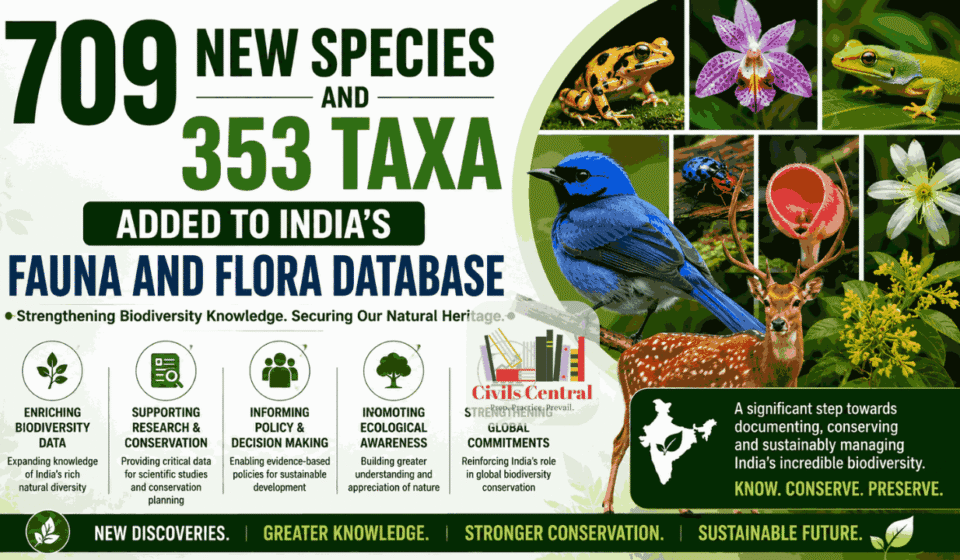
709 New Faunal Species and 353 Floral Taxa Added to India’s Fauna and Flora Database

Introduction
India is often described as one of the world’s biological treasure houses. Stretching from the snow-clad Himalayas to the tropical rainforests of the Western Ghats, from the mangrove ecosystems of the Sundarbans to the coral reefs of Lakshadweep and the Andaman & Nicobar Islands, the country hosts an extraordinary diversity of life forms. This immense ecological richness continues to surprise scientists, as evidenced by the recent addition of 709 new faunal species and 353 floral taxa to India’s official biodiversity records.
At first glance, the announcement may appear to be a routine scientific update. However, it reflects something much deeper—the continuous expansion of human knowledge about biodiversity, the strengthening of India’s taxonomic research capabilities, and the growing importance of documenting life forms in an era marked by climate change, habitat fragmentation, and accelerating species extinction.
For UPSC aspirants, this development is far more than an environmental news item. It connects directly with topics under Environment & Ecology, Biodiversity Conservation, Climate Change, Science & Technology, Sustainable Development, Governance, International Environmental Agreements, and India’s conservation architecture. Questions may arise not only about the numbers involved but also about taxonomy, endemic species, biodiversity hotspots, conservation institutions, legal frameworks, and India’s obligations under global biodiversity conventions.
Why in News?
The Zoological Survey of India (ZSI) and the Botanical Survey of India (BSI) released their latest annual findings documenting significant additions to India’s biodiversity inventory. The report highlights:
| Discovery | Number Added |
|---|---|
| New faunal species | 709 |
| New floral taxa | 353 |
These discoveries include:
- Previously unknown species
- Newly recorded species from India
- New plant varieties
- Subspecies
- New distribution records
- Taxonomic revisions
The findings once again reaffirm India’s position among the world’s 17 megadiverse countries and underscore the importance of systematic biodiversity exploration.
What Does Biodiversity Actually Mean?
Before appreciating the significance of discovering hundreds of new species, one must understand the broader concept of biodiversity.
The term biodiversity refers to the total variety of living organisms and the ecological complexes of which they form a part. It encompasses diversity at multiple levels—from genes to species to ecosystems. Biodiversity is therefore not merely about counting animals or plants; it is about understanding the intricate web of life that sustains ecological balance and human civilization.
Modern ecology recognises biodiversity through three interconnected dimensions.
Genetic Diversity
Genetic diversity refers to variation within a species. Different populations of rice, mango, tigers, or elephants possess unique genetic characteristics that enable adaptation to changing environmental conditions. Higher genetic diversity enhances resilience against diseases, pests, and climate variability.
Species Diversity
Species diversity concerns the variety and abundance of different species within an ecosystem. It is this aspect that is highlighted whenever new species are discovered. Every newly identified organism represents another branch in Earth’s evolutionary tree.
Ecosystem Diversity
Ecosystem diversity encompasses the wide range of habitats such as forests, grasslands, wetlands, deserts, coral reefs, alpine ecosystems, estuaries, and mangroves. Each ecosystem supports distinctive communities of organisms and ecological processes. Together, these three dimensions form the foundation of ecological resilience and sustainable development.
Why Do Scientists Continue Discovering New Species?
A common misconception is that modern science has already identified all major species. In reality, scientists estimate that only a fraction of Earth’s biodiversity has been formally described. Several factors explain why new discoveries continue every year.
First, vast regions remain biologically underexplored. Remote Himalayan valleys, deep-sea ecosystems, dense tropical forests, cave systems, and high-altitude habitats continue to reveal organisms unknown to science. Second, advances in molecular biology have transformed taxonomy. DNA barcoding and genomic analysis often reveal that what was previously considered a single species is actually several genetically distinct species.
Third, environmental changes alter species distributions. Improved surveys sometimes document species in India that had never before been officially recorded within the country’s boundaries. Finally, taxonomic revision remains an ongoing scientific process. As knowledge improves, scientists may reorganise species into new genera, identify subspecies, or recognise previously overlooked varieties.
Thus, biodiversity documentation is a dynamic scientific endeavour rather than a one-time exercise.
Understanding Taxonomy
The announcement mentions 353 new taxa, a term that frequently appears in UPSC examinations and often causes confusion. Taxonomy is the branch of biology concerned with the identification, naming, classification, and evolutionary relationships of living organisms. Every organism is placed within a hierarchical classification system.
| Taxonomic Rank | Example (Tiger) |
|---|---|
| Kingdom | Animalia |
| Phylum | Chordata |
| Class | Mammalia |
| Order | Carnivora |
| Family | Felidae |
| Genus | Panthera |
| Species | Panthera tigris |
The term taxon (plural: taxa) refers to any unit within this classification hierarchy. Thus, a new taxon may represent:
- a new species,
- a new subspecies,
- a new variety,
- a new genus,
- or another recognised taxonomic category.
Consequently, 353 floral taxa does not necessarily mean 353 entirely new plant species. Some additions may involve varieties, subspecies, or revised classifications based on improved scientific understanding.
Historical Evolution of Biodiversity Exploration in India
India has attracted naturalists and biologists for centuries because of its remarkable ecological diversity. Ancient Indian texts such as the Charaka Samhita, Sushruta Samhita, and Vrikshayurveda documented numerous medicinal plants, animals, and ecological relationships. Although these works were not taxonomic in the modern scientific sense, they reflected an advanced understanding of biological diversity.
The formal scientific documentation of India’s flora and fauna began during the colonial period. European naturalists undertook extensive surveys of forests, rivers, mountains, and coastal ecosystems. Initially, these efforts were largely driven by economic motives such as identifying commercially valuable timber, medicinal plants, agricultural crops, and game animals. Nevertheless, they laid the foundation for systematic biological classification.
Recognising the need for organised scientific institutions, the British administration established specialised survey organisations that would later become the backbone of biodiversity research in independent India.
After Independence, these institutions were transformed from colonial cataloguing agencies into national scientific organisations dedicated to biodiversity documentation, conservation, ecological research, and environmental policymaking. Today, their work supports conservation planning, protected area management, climate adaptation strategies, environmental impact assessments, invasive species monitoring, and implementation of international biodiversity commitments.
Botanical Survey of India (BSI)
The Botanical Survey of India (BSI) is India’s apex institution for plant taxonomy and floristic research.
| Particular | Details |
|---|---|
| Established | 1890 |
| Headquarters | Kolkata |
| Ministry | Ministry of Environment, Forest and Climate Change |
| Primary Objective | Survey, identification, documentation and conservation of India’s plant diversity |
The Botanical Survey of India was established to systematically document the country’s vast floral wealth. Over time, its mandate has expanded considerably. Today, the institution not only discovers new plant species but also assesses threatened plants, maintains national herbaria, develops digital biodiversity databases, advises governments on conservation priorities, and contributes to ecological restoration programmes.
Its scientists conduct extensive field expeditions across remote forests, alpine ecosystems, deserts, islands, wetlands, and biodiversity hotspots. Every specimen collected undergoes detailed morphological examination, comparison with previously known species, molecular analysis where necessary, and peer-reviewed scientific validation before it is formally recognised as a new taxon.
The BSI also plays a crucial role in identifying economically important plants, medicinal species, endemic flora, invasive alien plants, and climate-sensitive vegetation.
Major Functions of the Botanical Survey of India
The work of the Botanical Survey extends far beyond discovering new plants. Its activities include:
- Comprehensive floristic surveys across India
- Preparation of regional Floras and national checklists
- Documentation of endemic plant species
- Identification of threatened and rare flora
- Maintenance of National Herbarium collections
- Plant taxonomy and nomenclature
- DNA-assisted taxonomic studies
- Ecological assessment of fragile ecosystems
- Capacity building in plant taxonomy
- Advisory support for biodiversity conservation policies
These activities generate the scientific evidence required for effective biodiversity governance.
Zoological Survey of India (ZSI)
While the Botanical Survey focuses on plants, the Zoological Survey of India (ZSI) performs a similar role for animals.
| Particular | Details |
|---|---|
| Established | 1916 |
| Headquarters | Kolkata |
| Ministry | Ministry of Environment, Forest and Climate Change |
| Primary Objective | Survey and documentation of India’s faunal diversity |
India’s animal diversity ranges from microscopic protozoans to the Asian elephant, from deep-sea fishes to Himalayan snow leopards. Documenting such enormous diversity requires specialised expertise across numerous zoological disciplines including entomology, ornithology, ichthyology, herpetology, mammalogy, marine biology, and parasitology.
The Zoological Survey of India coordinates nationwide expeditions covering forests, wetlands, mountains, caves, islands, coral reefs, rivers, estuaries, and deep marine ecosystems. Scientists collect specimens, record ecological observations, analyse anatomical characteristics, and increasingly use molecular techniques to distinguish closely related species.
The organisation also maintains one of Asia’s largest zoological collections, preserving millions of specimens that serve as permanent scientific references.
Core Functions of the Zoological Survey of India
The responsibilities of ZSI include:
- Discovery of new animal species
- Faunal surveys across India
- Assessment of threatened animal species
- Maintenance of National Zoological Collections
- Marine biodiversity exploration
- Freshwater biodiversity studies
- Wildlife taxonomy
- DNA-based species identification
- Ecological monitoring
- Support for protected area management
Its work directly contributes to wildlife conservation planning and national biodiversity assessments.
Why Are Botanical and Zoological Surveys Important?
To many observers, documenting species may appear to be an academic exercise. In reality, taxonomy forms the foundation of nearly every aspect of biodiversity conservation. A species cannot be protected if it is unknown. Conservation laws, protected area management, ecological restoration, wildlife recovery programmes, invasive species control, and climate adaptation all depend upon accurate species identification.
For example, suppose scientists discover a frog species found only within one valley of the Western Ghats. Without recognising it as a distinct species, developmental projects could unknowingly destroy its only habitat, leading to global extinction before the organism was ever scientifically documented.
Thus, species discovery is often the first step toward conservation.
Taxonomy
Every scientific discipline requires a standard language. In biodiversity science, that language is taxonomy. Taxonomy provides a universal framework through which scientists across the world identify, classify, compare, and communicate about living organisms.
Without taxonomy:
- conservation plans become unreliable,
- ecological studies lose precision,
- environmental laws become difficult to implement,
- biodiversity databases become inconsistent,
- and international scientific collaboration becomes nearly impossible.
The famous Swedish biologist Carl Linnaeus revolutionised taxonomy during the eighteenth century by introducing the system of binomial nomenclature, under which every species receives a unique two-part scientific name consisting of its genus and species.
For example:
- Panthera leo — Lion
- Panthera tigris — Tiger
- Mangifera indica — Mango
This system eliminates confusion arising from multiple local names across different languages and countries.
How Does a New Species Get Discovered?
The process of recognising a new species is far more rigorous than simply finding an unfamiliar organism in nature. The journey typically follows a systematic scientific pathway.
Field Expedition
        │
        ▼
Specimen Collection
        │
        ▼
Morphological Examination
        │
        ▼
Comparison with Existing Species
        │
        ▼
DNA Analysis (if required)
        │
        ▼
Peer-reviewed Scientific Publication
        │
        ▼
International Acceptance
        │
        ▼
Entry into Global Taxonomic Database
Each stage requires extensive documentation. Scientists measure body structures, analyse reproductive organs, compare microscopic features, study ecological behaviour, examine geographical distribution, and increasingly rely on molecular genetics to confirm whether the organism truly represents a new species.
Only after rigorous peer review can it be officially recognised.
Modern Taxonomy and DNA Barcoding
Traditional taxonomy relied almost entirely upon physical characteristics such as body shape, colour, leaf arrangement, flower structure, skeletal features, or anatomical differences. However, many species appear nearly identical despite being genetically distinct. These are known as cryptic species.
Advances in molecular biology have transformed taxonomy through DNA barcoding.
DNA barcoding involves sequencing a short, standardised genetic region that functions like a biological barcode. By comparing this sequence with reference databases, scientists can determine whether an organism belongs to an existing species or represents an entirely new one.
The advantages are substantial:
- Identification of morphologically similar species
- Rapid verification of biodiversity records
- Detection of illegal wildlife trade
- Authentication of medicinal plants
- Monitoring invasive alien species
- Improved ecological surveys
- Greater accuracy in conservation planning
DNA barcoding therefore complements—not replaces—traditional taxonomy.
Why Taxonomy Is Called the Foundation of Conservation
Conservation begins with knowledge. Before governments can protect biodiversity, they must know:
- What species exist?
- Where are they found?
- How many individuals remain?
- Are they endemic?
- Are they threatened?
- What ecological role do they perform?
Taxonomy provides answers to each of these questions. It is therefore often described as the “first step of conservation biology.” Every wildlife protection programme, IUCN Red List assessment, recovery plan, habitat restoration initiative, and biodiversity policy ultimately depends upon accurate taxonomic information.
India: A Megadiverse Nation
India occupies only about 2.4% of the world’s land area, yet supports nearly 8% of the world’s recorded biodiversity. This extraordinary concentration of life forms places India among the 17 Megadiverse Countries, a group identified for their exceptionally high levels of species richness and endemism.
Several factors explain this remarkable diversity. India’s vast latitudinal extent, varied climatic zones, complex geological history, and wide range of ecosystems—from glaciers and alpine meadows to deserts, tropical forests, wetlands, mangroves, grasslands, coral reefs, and island ecosystems—have created ideal conditions for speciation and ecological adaptation over millions of years.
This diversity is further enriched by India’s location at the confluence of three major biogeographic realms: the Palearctic, Indo-Malayan, and Afro-tropical influences, resulting in unique assemblages of flora and fauna.
Biodiversity Hotspots in India
One of the principal reasons for India’s high biodiversity is the presence of globally recognised biodiversity hotspots—regions that combine exceptional concentrations of endemic species with significant habitat loss.
India contains parts of four global biodiversity hotspots:
| Biodiversity Hotspot | Indian Region | Importance |
|---|---|---|
| Himalaya | Himalayan States | Alpine flora, medicinal plants, snow-dependent fauna |
| Western Ghats–Sri Lanka | Western Ghats | Extremely high endemism, amphibians, reptiles, flowering plants |
| Indo-Burma | North-East India | Orchids, freshwater fishes, birds, insects and rainforest biodiversity |
| Sundaland | Nicobar Islands | Tropical rainforests, island endemism and unique evolutionary lineages |
These hotspots account for a disproportionately high share of India’s newly discovered species because they remain both biologically rich and relatively underexplored.
Endemism: Why Some Species Exist Only in One Place
Many of the newly documented species are likely to be endemic, meaning they are naturally found nowhere else on Earth.
Endemic species arise through long periods of geographic isolation and evolutionary adaptation. Mountain ranges, islands, deep valleys, and isolated forests often act as natural laboratories of evolution, allowing populations to diverge into distinct species over thousands or millions of years.
Such species are of immense conservation value because the destruction of their limited habitats can result in irreversible global extinction. Protecting endemic biodiversity therefore safeguards irreplaceable components of Earth’s evolutionary heritage.
Why Does Discovering New Species Matter?
Every species performs a unique ecological function. Some pollinate crops, others decompose organic matter, regulate pests, disperse seeds, recycle nutrients, maintain soil fertility, or sustain food chains. Even organisms that appear insignificant often play indispensable roles in ecosystem functioning.
When scientists discover a new species, they are identifying another component of this complex ecological network. Understanding its habitat, behaviour, interactions, and evolutionary history enables conservationists to design more effective management strategies.
The importance of species discovery extends well beyond ecology. New organisms frequently possess genetic traits that may prove valuable in agriculture, pharmaceuticals, biotechnology, industrial processes, or climate-resilient crop development. Numerous modern medicines—including antibiotics, anticancer compounds, and anti-inflammatory drugs—have originated from plants, fungi, and microorganisms discovered through biodiversity research.
Thus, documenting biodiversity is both an environmental imperative and a long-term investment in scientific innovation and economic development.
Biodiversity as Natural Capital
Traditional economic systems often regarded forests, rivers, wildlife, and ecosystems merely as exploitable resources. Modern ecological economics has fundamentally changed this perspective by recognising biodiversity as natural capital.
Natural capital refers to the stock of natural resources and ecosystems that generate a continuous flow of ecological goods and services essential for human well-being and economic activity. Unlike manufactured capital, which depreciates through use, healthy ecosystems can regenerate themselves if managed sustainably. Conversely, once biodiversity is irreversibly lost, rebuilding it may require centuries—or may never be possible.
Therefore, biodiversity conservation should be viewed not as an obstacle to development but as an investment that secures long-term ecological and economic resilience.
Ecosystem Services: How Biodiversity Supports Human Life
The value of biodiversity becomes clearer when examined through the concept of ecosystem services, a framework popularised by the Millennium Ecosystem Assessment (2005). Ecosystem services are the direct and indirect benefits that humans derive from nature.
These services are generally classified into four broad categories.
| Category | Nature of Service | Illustrative Examples |
|---|---|---|
| Provisioning Services | Tangible goods obtained from ecosystems | Food, freshwater, timber, fuelwood, medicinal plants, fibres, fisheries |
| Regulating Services | Ecological processes that regulate environmental conditions | Climate regulation, pollination, flood moderation, carbon sequestration, disease control |
| Cultural Services | Non-material benefits | Recreation, ecotourism, spiritual values, education, aesthetic appreciation |
| Supporting Services | Fundamental ecological processes | Nutrient cycling, soil formation, primary productivity, decomposition |
Every newly discovered species has the potential to contribute to one or more of these ecosystem services. Even organisms with no immediately apparent economic value may play critical ecological roles that become evident only through sustained scientific research.
Biodiversity and Climate Change: A Two-Way Relationship
Biodiversity and climate change are deeply interconnected. Climate change is emerging as one of the greatest threats to global biodiversity, while healthy ecosystems simultaneously constitute one of humanity’s most effective natural defences against climate change.
Rising temperatures, altered rainfall patterns, extreme weather events, glacier retreat, ocean acidification, and sea-level rise are transforming habitats faster than many species can adapt. Alpine plants migrate uphill, coral reefs experience bleaching, wetlands shrink, and phenological events such as flowering and migration become increasingly disrupted.
Conversely, biodiverse ecosystems enhance climate resilience. Forests absorb atmospheric carbon dioxide, mangroves protect coastlines from cyclones, wetlands buffer floods, grasslands store soil carbon, and diverse agricultural systems are generally more resistant to climatic variability than monocultures.
Consequently, biodiversity conservation and climate action should not be viewed as separate policy agendas. They are mutually reinforcing pillars of sustainable development.
Constitutional Foundations of Biodiversity Conservation
Although the Constitution of India does not explicitly use the term “biodiversity,” it provides a robust constitutional framework for environmental protection through Fundamental Duties, Directive Principles of State Policy, and judicial interpretation.
Article 48A
Inserted by the 42nd Constitutional Amendment Act, 1976, Article 48A directs the State to: “Protect and improve the environment and safeguard the forests and wildlife of the country.”
Though part of the Directive Principles, it has significantly influenced environmental legislation and policy formulation.
Article 51A(g)
The Constitution also places responsibility upon citizens. Article 51A(g) declares it to be the duty of every citizen: “to protect and improve the natural environment including forests, lakes, rivers and wildlife, and to have compassion for living creatures.”
This provision reflects the principle that environmental conservation is a shared societal responsibility rather than an exclusive governmental function.
Article 21 and Judicial Expansion
Perhaps the most significant constitutional development has been the expansive interpretation of Article 21 by the Supreme Court. Through a series of landmark judgments, the Court has held that the Right to Life includes the right to a healthy, pollution-free, and ecologically balanced environment.
This judicial interpretation has transformed environmental protection from a policy objective into an enforceable constitutional right, strengthening biodiversity conservation efforts across India.
Evolution of India’s Biodiversity Laws
India’s biodiversity governance framework has evolved gradually in response to changing ecological challenges and international commitments.
Colonial Forest Laws
        │
        ▼
Wildlife (Protection) Act, 1972
        │
        ▼
Forest (Conservation) Act, 1980
        │
        ▼
Environment (Protection) Act, 1986
        │
        ▼
Convention on Biological Diversity (1992)
        │
        ▼
Biological Diversity Act, 2002
        │
        ▼
Biological Diversity (Amendment) Act, 2023
This progression illustrates the shift from species-specific protection towards a comprehensive ecosystem and governance-based approach.
Biological Diversity Act, 2002
The Biological Diversity Act, 2002 represents India’s principal legislation governing biodiversity conservation, sustainable utilisation, and equitable sharing of benefits arising from biological resources.
The Act was enacted primarily to implement India’s obligations under the Convention on Biological Diversity (CBD) adopted during the Rio Earth Summit (1992).
The legislation rests upon three interrelated objectives:
- Conservation of biological diversity
- Sustainable use of biological resources
- Fair and equitable sharing of benefits arising from the use of biological resources and associated traditional knowledge
Unlike earlier wildlife legislation that focused mainly on protected areas and endangered species, the Biological Diversity Act recognises biodiversity as a living resource closely linked with local communities, indigenous knowledge, scientific research, and economic development.
Institutional Architecture Under the Biological Diversity Act
The Act establishes a three-tier institutional framework that decentralises biodiversity governance while ensuring coordination between the Union, States, and local bodies.
National Biodiversity Authority (NBA)
The National Biodiversity Authority (NBA) functions as the apex statutory body under the Act.
Major Functions
- Regulates access to India’s biological resources by foreign individuals and organisations.
- Approves transfer of research results involving biological resources.
- Ensures equitable benefit sharing.
- Advises the Central Government on biodiversity conservation policies.
- Supports implementation of international biodiversity commitments.
- Promotes conservation of threatened biological resources.
The NBA therefore serves as the principal regulator balancing biodiversity conservation with scientific research and commercial utilisation.
State Biodiversity Boards (SBBs)
Each State establishes a State Biodiversity Board to regulate the use of biological resources by Indian entities and advise State Governments on biodiversity conservation. Their responsibilities include:
- Monitoring commercial utilisation of biological resources.
- Promoting sustainable use.
- Advising State Governments on conservation policies.
- Coordinating with Biodiversity Management Committees.
They play a crucial role in integrating biodiversity considerations into State-level development planning.
Biodiversity Management Committees (BMCs)
At the grassroots level, every local body—including Panchayats, Municipalities, and Municipal Corporations—is required to establish a Biodiversity Management Committee.
The philosophy behind BMCs reflects an important shift in conservation thinking: biodiversity cannot be protected solely through top-down governmental action. Local communities possess intimate ecological knowledge acquired through generations of interaction with their surrounding environment.
Accordingly, BMCs are entrusted with:
- Preparing People’s Biodiversity Registers.
- Conserving local biological resources.
- Documenting traditional knowledge.
- Supporting sustainable resource management.
- Participating in benefit-sharing mechanisms.
These committees embody the principle of decentralised environmental governance envisaged by the 73rd and 74th Constitutional Amendments.
People’s Biodiversity Registers (PBRs)
Among the most innovative features of India’s biodiversity governance framework is the preparation of People’s Biodiversity Registers (PBRs). A PBR is a comprehensive community-led document recording local biodiversity along with associated traditional knowledge.
Rather than relying solely upon scientists, the process actively involves farmers, tribal communities, fishermen, pastoralists, herbal practitioners, forest dwellers, and village elders whose ecological knowledge has accumulated over centuries.
Typically, a People’s Biodiversity Register includes:
- Local plant diversity
- Animal diversity
- Crop varieties
- Livestock breeds
- Medicinal plants
- Traditional agricultural practices
- Indigenous conservation methods
- Seasonal ecological observations
- Local ecological knowledge
The PBR thus bridges the gap between modern scientific research and traditional ecological wisdom.
Access and Benefit Sharing (ABS)
One of the central innovations of the Biological Diversity Act is the principle of Access and Benefit Sharing (ABS). Historically, corporations and researchers often utilised biological resources or traditional knowledge from developing countries without compensating local communities. This phenomenon became widely known as biopiracy.
ABS seeks to correct this historical imbalance by ensuring that when biological resources or associated traditional knowledge generate commercial benefits, a fair share of those benefits flows back to the custodians of those resources.
Benefits may include:
- Monetary compensation
- Technology transfer
- Capacity building
- Infrastructure development
- Community welfare programmes
- Joint intellectual property rights where appropriate
Thus, biodiversity conservation becomes economically rewarding for local communities, strengthening long-term conservation incentives.
Traditional Knowledge: India’s Hidden Biodiversity Strength
India’s biodiversity is inseparable from its rich heritage of traditional ecological knowledge. Tribal communities, forest dwellers, pastoral societies, fishing communities, and indigenous healers have developed sophisticated understanding of local ecosystems over centuries. Their knowledge encompasses medicinal plants, sustainable harvesting methods, seed conservation, water management, livestock breeding, forest regeneration, and seasonal ecological indicators.
Modern biodiversity governance increasingly recognises that conservation cannot succeed by excluding local communities. Instead, scientific knowledge and traditional wisdom must complement one another.
The Biological Diversity Act institutionalises this philosophy by recognising community knowledge as a valuable national resource deserving both protection and equitable benefit sharing.
The Biological Diversity (Amendment) Act, 2023
More than two decades after the enactment of the Biological Diversity Act, 2002, Parliament introduced significant amendments through the Biological Diversity (Amendment) Act, 2023. The objective was to balance biodiversity conservation with the promotion of research, innovation, traditional medicine, and the bioeconomy while ensuring compliance with international obligations.
The amendment emerged in response to concerns that the original regulatory framework, though robust from a conservation perspective, often imposed procedural complexities on scientific research, startups, the AYUSH sector, and domestic industries.
The amended legislation seeks to encourage the sustainable utilisation of biological resources without diluting the fundamental principles of conservation and equitable benefit sharing.
Major Changes Introduced
| Provision | Earlier Framework | Position after Amendment | Significance |
|---|---|---|---|
| Research and innovation | Multiple regulatory approvals | Simplified procedures for certain categories | Encourages scientific research |
| AYUSH sector | Wider regulatory coverage | Certain traditional medicine practitioners exempted from specified approvals | Promotes traditional healthcare systems |
| Benefit Sharing | Existing ABS mechanism | Rationalised implementation | Improves ease of doing research while protecting community rights |
| Penalties | Criminal provisions in several cases | Greater reliance on monetary penalties for specified violations | Shift towards civil compliance |
The amendment has generated both support and debate. Supporters argue that it promotes innovation and the bioeconomy, whereas conservationists caution that regulatory relaxation should not weaken biodiversity protection or community rights.
Convention on Biological Diversity (CBD)
India’s biodiversity legislation is closely linked with the Convention on Biological Diversity (CBD), one of the three major agreements adopted during the Rio Earth Summit (1992). The CBD represented a turning point in international environmental law because it recognised biodiversity not merely as a scientific concern but as a common global heritage requiring cooperative governance.
The Convention rests upon three mutually reinforcing objectives:
- Conservation of biological diversity.
- Sustainable use of biological resources.
- Fair and equitable sharing of benefits arising from the utilisation of genetic resources.
Unlike earlier conservation treaties that primarily focused on endangered species or protected areas, the CBD adopted a holistic ecosystem-based approach integrating conservation, development, indigenous knowledge, and sustainable use.
India is a Party to the Convention and has incorporated many of its principles into domestic legislation through the Biological Diversity Act.
The Kunming–Montreal Global Biodiversity Framework (GBF)
Recognising that the world failed to achieve many earlier biodiversity targets, Parties to the CBD adopted the Kunming–Montreal Global Biodiversity Framework (2022). The framework is often described as the biodiversity equivalent of the Paris Agreement on climate change because it establishes a long-term global roadmap for halting and reversing biodiversity loss by 2030 and achieving harmony with nature by 2050.
Among its most significant aspirations are:
- Conserving at least 30% of terrestrial and marine ecosystems by 2030 (“30×30 Target”).
- Restoring degraded ecosystems.
- Reducing pollution affecting biodiversity.
- Preventing invasive alien species.
- Ensuring sustainable agriculture, fisheries, and forestry.
- Mobilising greater financial resources for biodiversity conservation.
- Strengthening indigenous peoples’ and local communities’ participation.
For India, achieving these objectives requires expanding ecological restoration, improving protected area management, integrating biodiversity into sectoral planning, and enhancing scientific monitoring.
Nagoya Protocol: Fairness in the Use of Biological Resources
The Nagoya Protocol (2010) supplements the Convention on Biological Diversity by operationalising the principle of Access and Benefit Sharing (ABS).
Historically, many corporations and research institutions utilised biological resources and traditional knowledge from biodiversity-rich countries without compensating the communities that had conserved them. The Nagoya Protocol seeks to address this inequity by establishing international rules governing access to genetic resources and the sharing of benefits arising from their utilisation.
Benefits may include:
- Financial compensation,
- Technology transfer,
- Collaborative research,
- Capacity building,
- Infrastructure support,
- Intellectual property arrangements where appropriate.
India’s Access and Benefit Sharing mechanism under the Biological Diversity Act reflects these principles.
Cartagena Protocol on Biosafety
Advances in biotechnology have created enormous opportunities for agriculture and medicine, but they have also raised concerns regarding genetically modified organisms (GMOs). The Cartagena Protocol on Biosafety (2000) aims to ensure the safe handling, transport, and use of Living Modified Organisms (LMOs) resulting from modern biotechnology.
The Protocol adopts the Precautionary Principle, allowing countries to regulate or restrict imports of LMOs where scientific uncertainty exists regarding potential environmental or health impacts.
For UPSC aspirants, this Protocol often intersects with topics relating to:
- GM crops,
- Biosafety,
- Biotechnology regulation,
- Environmental governance.
International Union for Conservation of Nature (IUCN)
The IUCN is the world’s oldest and one of the most influential conservation organisations. Although it is not a treaty body, its scientific assessments profoundly influence global conservation policy.
Its most recognised contribution is the IUCN Red List of Threatened Species, which classifies species according to their extinction risk.
| Category | Meaning |
|---|---|
| Least Concern (LC) | Low extinction risk |
| Near Threatened (NT) | May become threatened |
| Vulnerable (VU) | High risk of extinction |
| Endangered (EN) | Very high risk |
| Critically Endangered (CR) | Extremely high risk |
| Extinct in the Wild (EW) | Survives only in captivity |
| Extinct (EX) | No surviving individuals |
Many newly discovered species may eventually undergo IUCN assessment once sufficient ecological information becomes available.
Intergovernmental Science-Policy Platform on Biodiversity and Ecosystem Services (IPBES)
Often referred to as the “IPCC for Biodiversity,” the IPBES provides scientific assessments that connect biodiversity research with policymaking.
Its reports evaluate:
- Status of global biodiversity,
- Drivers of biodiversity loss,
- Ecosystem services,
- Sustainable use,
- Restoration pathways,
- Policy options.
One of its landmark global assessments warned that nearly one million species worldwide face the risk of extinction due to human activities, highlighting the urgency of conservation.
Major Threats to India’s Biodiversity
Despite continuous species discoveries, India’s biodiversity faces multiple anthropogenic and natural pressures. These threats rarely operate in isolation; instead, they interact and reinforce one another, creating cumulative ecological stress.
1. Habitat Loss and Fragmentation
Rapid urbanisation, infrastructure expansion, mining, industrialisation, agricultural conversion, and unplanned development reduce and fragment natural habitats. Fragmentation isolates wildlife populations, disrupts migration routes, and diminishes genetic exchange, making species more vulnerable to extinction.
2. Climate Change
Changing temperature and precipitation regimes are altering species distributions, affecting breeding cycles, increasing forest fires, accelerating glacier retreat, and causing coral bleaching. Many endemic species with narrow ecological niches have limited capacity to adapt.
3. Invasive Alien Species
Species introduced intentionally or accidentally outside their natural range can outcompete native flora and fauna, alter ecosystem processes, and reduce biodiversity.
Some important examples in India include:
| Invasive Species | Impact |
|---|---|
| Lantana camara | Suppresses native forest regeneration |
| Prosopis juliflora | Alters grassland ecosystems |
| Water Hyacinth | Chokes freshwater bodies |
| African Catfish | Threatens indigenous fish diversity |
Managing invasive alien species has become a major conservation priority under the Kunming–Montreal Framework.
4. Pollution
Industrial effluents, agricultural chemicals, plastic waste, untreated sewage, and marine pollution degrade habitats and reduce species survival. Microplastics and chemical contaminants increasingly threaten both terrestrial and aquatic biodiversity.
5. Overexploitation
Unsustainable extraction of timber, medicinal plants, fish, wildlife, and non-timber forest products places severe pressure on natural populations. Illegal wildlife trade further compounds these threats.
Biodiversity and Sustainable Development Goals (SDGs)
Biodiversity conservation is central to achieving the 2030 Agenda for Sustainable Development. While SDGs 14 (Life Below Water) and 15 (Life on Land) directly address biodiversity, healthy ecosystems also underpin goals related to poverty eradication, food security, health, climate action, clean water, sustainable cities, and economic growth.
The interlinkages are evident:
| SDG | Biodiversity Linkage |
|---|---|
| SDG 2 | Pollination, soil fertility, crop diversity |
| SDG 3 | Medicinal resources, disease regulation |
| SDG 6 | Watershed protection and freshwater ecosystems |
| SDG 13 | Carbon sequestration and climate resilience |
| SDG 14 | Marine biodiversity conservation |
| SDG 15 | Terrestrial ecosystem protection |
This demonstrates that biodiversity is not a sectoral issue but a foundational element of sustainable development.
Balancing Conservation and Development
One of the most complex governance challenges is reconciling developmental aspirations with biodiversity conservation. Infrastructure projects, renewable energy expansion, mining, urbanisation, and industrial growth are essential for economic progress, yet they often overlap with ecologically sensitive regions.
A balanced approach requires:
- Strategic Environmental Assessments rather than project-by-project appraisal alone.
- Landscape-level planning that maintains ecological connectivity.
- Scientific Environmental Impact Assessments (EIAs).
- Adoption of mitigation hierarchy—avoid, minimise, restore, and offset impacts.
- Community participation in decision-making.
- Nature-based Solutions (NbS) wherever feasible.
The objective is not to halt development but to ensure that development remains ecologically sustainable and socially equitable.
Critical Evaluation: Is Species Discovery Alone Sufficient?
While the annual addition of new species reflects scientific progress, it should not create complacency. Discovering biodiversity is only the first step. Many newly described organisms remain poorly understood in terms of their ecology, population status, reproductive biology, and conservation requirements. Some may already face severe threats from habitat degradation even before formal assessment.
Moreover, India continues to face a shortage of trained taxonomists, limited funding for long-term biodiversity monitoring, uneven documentation across ecosystems, and gaps in integrating biodiversity data into development planning.
Therefore, the true success of biodiversity exploration will be measured not by the number of species described each year, but by the extent to which this knowledge informs conservation policy, empowers local communities, strengthens ecosystem resilience, and safeguards India’s natural heritage for future generations.
Integrated Concept
709 New Species & 353 Floral Taxa
                 │
                 ▼
      Improved Taxonomic Knowledge
                 │
                 ▼
 Better Biodiversity Documentation
                 │
      ┌──────────┼──────────┐
      ▼          ▼          ▼
Conservation  Scientific   Policy &
 Planning      Research    Governance
      │          │          │
      └──────────┼──────────┘
                 ▼
 Sustainable Management of Biological Resources
                 │
                 ▼
 Climate Resilience • Ecological Security • Bioeconomy
                 │
                 ▼
      Sustainable Development & Environmental Security
Way Forward
1. Strengthening Taxonomic Research
The discovery of new species underscores the continuing importance of taxonomy. However, taxonomy faces a global decline due to the shortage of trained taxonomists, inadequate funding, and limited institutional capacity. India must invest in creating a new generation of taxonomic experts through specialised university programmes, fellowships, interdisciplinary research, and international collaborations.
Modern taxonomy should combine classical morphological studies with molecular techniques such as DNA barcoding, genomics, artificial intelligence-assisted species identification, and bioinformatics. Expanding national reference collections, digitising museum and herbarium records, and creating open-access biodiversity databases will further strengthen scientific research.
2. Accelerating Biodiversity Documentation
Although India has documented a remarkable diversity of life, many ecosystems remain insufficiently explored. Remote Himalayan landscapes, deep-sea environments, cave ecosystems, freshwater habitats, microorganisms, fungi, insects, and marine invertebrates continue to hold immense discovery potential.
Future biodiversity surveys should prioritise:
- Underexplored landscapes.
- Climate-sensitive ecosystems.
- Endemic biodiversity hotspots.
- Marine biodiversity.
- Soil microorganisms.
- Pollinator diversity.
- Freshwater ecosystems.
Comprehensive biodiversity inventories are indispensable for evidence-based conservation planning.
3. Integrating Technology into Biodiversity Conservation
The future of biodiversity governance will increasingly depend on technological innovation. Emerging technologies now allow conservation agencies to monitor ecosystems with unprecedented accuracy.
Important technological interventions include:
| Technology | Conservation Application |
|---|---|
| DNA Barcoding | Accurate species identification |
| Environmental DNA (eDNA) | Detecting species through water or soil samples |
| Artificial Intelligence | Automated species recognition |
| GIS & Remote Sensing | Habitat mapping and monitoring |
| Satellite Monitoring | Forest cover and ecosystem change |
| Camera Traps | Wildlife population estimation |
| Acoustic Monitoring | Bird, amphibian and bat surveys |
| Drone Technology | Monitoring inaccessible landscapes |
Technology should complement—not replace—field ecology and local ecological knowledge.
4. Community-Centred Conservation
Experience across the world demonstrates that biodiversity cannot be protected solely through government regulation. Conservation succeeds when local communities become partners rather than passive beneficiaries. India’s tribal communities, pastoralists, fisherfolk, forest dwellers, and indigenous societies possess generations of ecological knowledge that complements scientific research.
Strengthening:
- Biodiversity Management Committees (BMCs),
- People’s Biodiversity Registers (PBRs),
- Joint Forest Management,
- Community Reserves,
- Conservation Reserves,
- Eco-development Committees,
will create a participatory model of biodiversity governance consistent with constitutional decentralisation.
5. Mainstreaming Biodiversity Across Development Sectors
Historically, biodiversity has often been treated as an environmental issue separate from economic planning. Contemporary policy thinking recognises that biodiversity must be integrated into every sector of development. Planning for agriculture, infrastructure, mining, urbanisation, renewable energy, fisheries, tourism, transportation, and industrial development should incorporate biodiversity assessments at the planning stage rather than as an afterthought.
This reflects the internationally accepted principle of mainstreaming biodiversity, which seeks to harmonise conservation with economic growth.
6. Strengthening Landscape-Level Conservation
Conservation policies have traditionally focused on isolated protected areas such as National Parks and Wildlife Sanctuaries. However, ecological processes operate across landscapes rather than administrative boundaries.
Future conservation strategies should prioritise:
- Wildlife corridors.
- River basin conservation.
- Landscape connectivity.
- Ecosystem restoration.
- Green infrastructure.
- Ecological buffers around protected areas.
Maintaining ecological connectivity becomes especially important under changing climatic conditions, allowing species to migrate and adapt.
7. Restoring Degraded Ecosystems
India possesses millions of hectares of degraded forests, wetlands, grasslands, mangroves, and riverine ecosystems. Ecological restoration should become a national priority because restored ecosystems simultaneously:
- improve biodiversity,
- enhance carbon sequestration,
- increase groundwater recharge,
- reduce disaster risk,
- improve agricultural productivity,
- support rural livelihoods.
Restoration should emphasise native species rather than monoculture plantations, thereby preserving ecological integrity.
8. Expanding Biodiversity Financing
Conservation requires sustained financial investment. Innovative financing mechanisms may include:
- Green Bonds.
- Biodiversity Credits (with robust safeguards).
- Payment for Ecosystem Services (PES).
- Corporate biodiversity responsibility.
- Public-private partnerships.
- Ecotourism revenue sharing.
- International biodiversity funds.
Such mechanisms should complement—not substitute—public investment in biodiversity conservation.
9. Combating Invasive Alien Species
Invasive Alien Species (IAS) represent one of the fastest-growing threats to biodiversity. India requires a comprehensive national strategy focusing upon:
- Early detection.
- Rapid response.
- National surveillance systems.
- Strict quarantine protocols.
- Public awareness.
- Restoration of invaded ecosystems.
- Scientific risk assessment.
Preventing biological invasions is often significantly cheaper than attempting ecological restoration after invasion.
10. Linking Biodiversity with Climate Policy
Climate change and biodiversity conservation should no longer be treated as separate policy domains. Nature-based Solutions (NbS) offer opportunities to simultaneously:
- mitigate climate change,
- conserve biodiversity,
- improve water security,
- enhance disaster resilience,
- support sustainable livelihoods.
Mangrove restoration, watershed development, urban forests, peatland conservation, grassland restoration, and regenerative agriculture exemplify such integrated approaches.
Important Committees, Reports and International Recommendations
Several international and national scientific bodies have consistently emphasised the urgent need to strengthen biodiversity governance.
| Institution / Report | Major Recommendation | UPSC Relevance |
|---|---|---|
| Convention on Biological Diversity (CBD) | Conservation, sustainable use and equitable benefit sharing | International Environment |
| Kunming–Montreal Global Biodiversity Framework | 30×30 conservation target, ecosystem restoration | Current Affairs |
| Nagoya Protocol | Access and Benefit Sharing | Environment & Governance |
| Cartagena Protocol | Biosafety of Living Modified Organisms | Biotechnology |
| IPBES Global Assessment | Mainstream biodiversity into economic planning | Environment |
| IUCN | Species assessment and Red List | Wildlife Conservation |
| Millennium Ecosystem Assessment | Ecosystem services approach | Ecology |
| Bonn Challenge | Forest landscape restoration | Climate & Forestry |
| UN Decade on Ecosystem Restoration | Large-scale ecosystem recovery | Sustainable Development |
Conclusion
The addition of 709 new faunal species and 353 floral taxa to India’s biodiversity records is far more than a scientific statistic. It is a reminder that nature continues to reveal its complexity even in an age of satellites, artificial intelligence, and genomic science. Every newly documented organism enriches our understanding of evolution, strengthens ecological knowledge, and expands humanity’s collective natural heritage.
For India, one of the world’s seventeen megadiverse countries, these discoveries reinforce both an extraordinary privilege and an immense responsibility. Biodiversity is not merely a collection of species confined to forests and protected areas; it underpins agriculture, water security, climate resilience, public health, cultural identity, and sustainable economic growth. Conserving it is therefore not an environmental luxury but a developmental necessity.
The future of biodiversity conservation will depend on India’s ability to move beyond species discovery towards integrated ecological governance. Scientific taxonomy must work alongside indigenous knowledge, technological innovation must complement field ecology, and conservation must become an integral component of national development planning. In an era defined by climate change and ecological uncertainty, protecting biodiversity is ultimately an investment in the nation’s long-term environmental security, economic prosperity, and constitutional commitment to safeguarding the natural heritage for future generations.
Revision
                         709 New Species & 353 Floral Taxa
                                        │
        ┌───────────────────────────────┼───────────────────────────────┐
        │                               │                               │
        ▼                               ▼                               ▼
  Taxonomy                      Biodiversity                  Scientific Discovery
        │                               │                               │
        ▼                               ▼                               ▼
Morphology                    Genetic Diversity               DNA Barcoding
Classification                Species Diversity               Molecular Taxonomy
Binomial Nomenclature         Ecosystem Diversity             eDNA
        │                               │
        └──────────────┬────────────────┘
                       ▼
               Biodiversity Conservation
                       │
        ┌──────────────┼───────────────────────┐
        ▼              ▼                       ▼
 Constitutional   Legal Framework        Institutions
 Framework         Biological Diversity  NBA
 Art.48A           Act 2002              BSI
 Art.51A(g)        Amendment 2023        ZSI
 Art.21            Wildlife Act          SBBs
                                          BMCs
                       │
                       ▼
               International Framework
                       │
     CBD ─ Nagoya ─ Cartagena ─ GBF ─ IUCN ─ IPBES
                       │
                       ▼
             Sustainable Development
                       │
       Climate Action • SDGs • Bioeconomy • Nature-based Solutions
Quick Revision
| Theme | Core Learning |
|---|---|
| Why in News | 709 new faunal species and 353 floral taxa added to India’s biodiversity database |
| Major Institutions | Botanical Survey of India (BSI), Zoological Survey of India (ZSI), National Biodiversity Authority (NBA) |
| Key Law | Biological Diversity Act, 2002 (amended in 2023) |
| Constitutional Basis | Articles 48A, 51A(g), and judicial interpretation of Article 21 |
| Global Convention | Convention on Biological Diversity (CBD) |
| Important Protocols | Nagoya Protocol, Cartagena Protocol |
| Global Framework | Kunming–Montreal Global Biodiversity Framework (30×30 Target) |
| Scientific Tool | DNA Barcoding, Environmental DNA (eDNA), GIS, Remote Sensing |
| Governance Principle | Conservation + Sustainable Use + Access and Benefit Sharing (ABS) |
| Emerging Focus | Nature-based Solutions, Bioeconomy, Ecosystem Restoration, Community Participation |
FAQ
Q1. Why is the discovery of 709 new species important for India?
It strengthens India’s biodiversity database, improves conservation planning, expands scientific knowledge, and reinforces India’s status as one of the world’s megadiverse countries.
Q2. What is the difference between flora, fauna and taxa?
Flora refers to plant life, fauna refers to animal life, while taxa are taxonomic units such as species, subspecies, genera, or varieties used in biological classification.
Q3. What is taxonomy?
Taxonomy is the scientific discipline of identifying, naming, classifying, and describing living organisms according to internationally accepted principles.
Q4. What is the role of the Botanical Survey of India?
The Botanical Survey of India surveys, identifies, documents, and conserves India’s plant diversity while maintaining national herbarium collections and supporting biodiversity research.
Q5. What is the role of the Zoological Survey of India?
The Zoological Survey of India documents animal diversity, discovers new species, maintains zoological collections, and supports wildlife conservation and environmental policymaking.
Q6. Which law governs biodiversity conservation in India?
The Biological Diversity Act, 2002 (amended in 2023) provides the legal framework for biodiversity conservation, sustainable use, and equitable benefit sharing.
Q7. What is the Convention on Biological Diversity (CBD)?
The CBD is an international environmental treaty adopted in 1992 with three objectives: biodiversity conservation, sustainable use of biological resources, and fair and equitable sharing of benefits from genetic resources.
Q8. Why is biodiversity important?
Biodiversity supports ecosystem services such as food production, pollination, climate regulation, soil fertility, medicines, disaster resilience, and sustainable economic development.
About The Author