
Why is SSBSK in News?
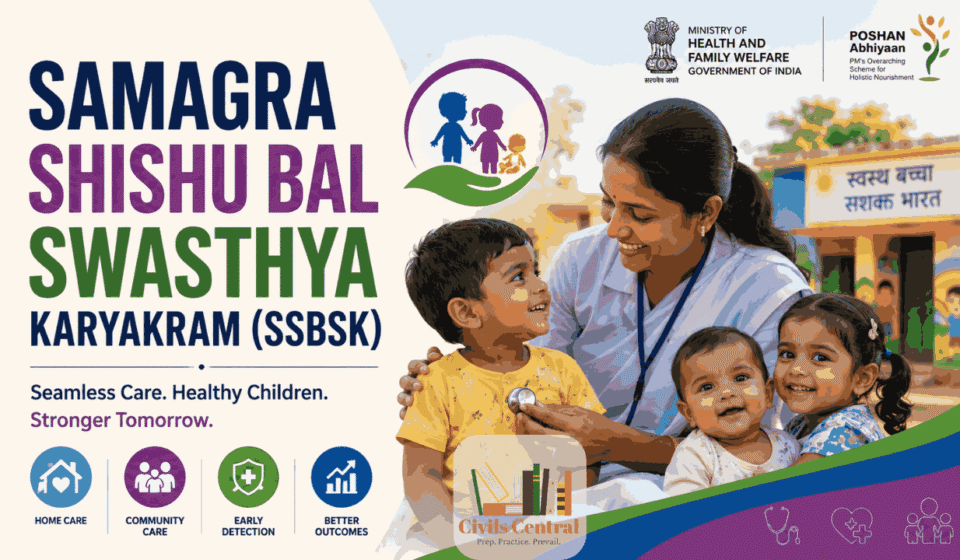
The Samagra Shishu Bal Swasthya Karyakram (SSBSK) was recently highlighted by the Government of India through a Press Information Bureau (PIB) release while emphasizing the country’s efforts to strengthen comprehensive healthcare services for children. The initiative reflects India’s commitment to ensuring that every child receives timely health screening, early diagnosis, treatment, and referral services from birth through adolescence.
Although the recent announcement brought the programme into the spotlight, UPSC rarely asks questions only from current events. Instead, it expects aspirants to understand the broader public health framework, institutional mechanisms, constitutional foundations, and linkages with other flagship health initiatives.
Therefore, SSBSK should be studied not merely as a government scheme but as an important component of India’s strategy for improving child survival, nutrition, human capital formation, and achieving Universal Health Coverage (UHC).
Introduction
Healthy children are the foundation of a healthy nation. A country’s economic productivity, educational outcomes, and demographic dividend depend significantly on the health and nutrition of its children during the earliest years of life. Recognizing this, the Government of India has adopted a life-cycle approach to child healthcare through the Samagra Shishu Bal Swasthya Karyakram (SSBSK). The programme aims to provide comprehensive preventive, promotive, curative, and referral healthcare services for children from birth to adolescence.
Unlike conventional healthcare programmes that focus only on treating illnesses after symptoms appear, SSBSK emphasizes early identification of health conditions, timely medical intervention, and continuous follow-up. This approach minimizes long-term disabilities, improves educational outcomes, reduces healthcare costs, and enhances the overall quality of life.
The programme operates under the umbrella of the National Health Mission (NHM) and adopts a convergent approach involving the health, education, and women and child development sectors. It integrates the efforts of medical professionals, Anganwadi workers, ASHAs, school authorities, and District Early Intervention Centres (DEICs) to ensure that children receive age-appropriate health services. By focusing on screening, early diagnosis, treatment, and referral, SSBSK seeks to create a healthier generation capable of contributing effectively to India’s social and economic development.
Why Did India Need a Programme Like SSBSK?
India has made remarkable progress in reducing infant and child mortality over the past few decades. Nevertheless, several public health challenges continue to affect millions of children across the country.
Many congenital disorders remain undetected until they become severe. Nutritional deficiencies continue to impair cognitive development. Childhood disabilities often go unnoticed because of inadequate screening facilities, particularly in rural and tribal regions. Delayed diagnosis frequently results in irreversible complications that could have been prevented through timely intervention.
A comprehensive child health programme became essential because of multiple interconnected challenges.
1. High Burden of Birth Defects
Every year, a significant number of children are born with congenital abnormalities such as congenital heart disease, cleft lip and palate, clubfoot, hearing impairment, and neural tube defects. Many of these conditions can be successfully treated if detected early. However, delayed diagnosis often results in lifelong disability.
2. Persistent Malnutrition
India continues to face one of the world’s largest burdens of child malnutrition. Malnutrition affects:
- Physical growth
- Brain development
- Learning ability
- Immunity
- Productivity in adulthood
Poor nutrition during the first thousand days of life has lifelong consequences for health and economic productivity.
3. Micronutrient Deficiencies
Children frequently suffer from deficiencies of:
- Iron
- Vitamin A
- Vitamin D
- Iodine
- Zinc
These deficiencies increase susceptibility to infections, impair cognitive development, and reduce school performance.
4. Developmental Delays
Many developmental disorders remain unnoticed during infancy. Examples include:
- Autism Spectrum Disorder
- Cerebral Palsy
- Speech delay
- Hearing impairment
- Vision problems
- Intellectual disabilities
Early intervention significantly improves outcomes.
5. Childhood Diseases
Common communicable and non-communicable diseases continue to affect school-age children. These include:
- Respiratory infections
- Dental diseases
- Skin infections
- Vision disorders
- Anaemia
- Worm infestations
Routine screening helps detect these conditions before complications arise.
6. School Health Challenges
Poor health directly affects educational outcomes. Children suffering from untreated illnesses often experience:
- Higher absenteeism
- Poor concentration
- Reduced academic performance
- Increased dropout rates
Healthy children are better learners.
Child Health Scenario in India
India has witnessed considerable improvement in child health indicators owing to sustained public health interventions, expanded immunization, better institutional deliveries, and improvements in nutrition. Nevertheless, substantial regional disparities continue to exist.
Infant Mortality
India’s Infant Mortality Rate (IMR) has declined steadily over the years due to improved maternal healthcare, immunization coverage, neonatal care, and better public health infrastructure. However, neonatal deaths continue to account for a significant proportion of under-five mortality.
Under-Five Mortality
The country has made progress toward reducing under-five mortality, but preventable causes such as pneumonia, diarrhoea, birth complications, prematurity, congenital disorders, and malnutrition remain major contributors. Early diagnosis and treatment can prevent many of these deaths.
Malnutrition
Malnutrition remains one of India’s biggest public health concerns. It manifests in several forms:
- Stunting
- Wasting
- Underweight
- Hidden hunger
- Micronutrient deficiencies
These conditions adversely affect physical growth, brain development, immunity, and future earning potential.
Anaemia
Anaemia continues to affect children and adolescents across India, reducing learning capacity, immunity, and physical development. This has prompted the Government to launch dedicated initiatives such as Anaemia Mukt Bharat, which complements the objectives of SSBSK.
Disability Burden
Many childhood disabilities remain undiagnosed during the early years. Without timely intervention, these conditions become increasingly difficult to manage, affecting education, employment, and social inclusion.
Objectives of Samagra Shishu Bal Swasthya Karyakram
The programme seeks to ensure that every child receives comprehensive healthcare services during the most critical stages of growth and development. Its major objectives include:
1. Early Detection of Health Conditions
The programme emphasizes identifying diseases before symptoms become severe. Early diagnosis improves treatment outcomes and prevents complications.
2. Universal Health Screening
Every eligible child should undergo periodic health examinations irrespective of socio-economic background. Universal screening promotes equity in healthcare.
3. Timely Medical Intervention
Children diagnosed with health conditions receive appropriate treatment through public healthcare facilities or referral institutions.
4. Reduction in Childhood Mortality
Timely diagnosis and treatment reduce preventable deaths among newborns and children.
5. Prevention of Permanent Disability
Many disabilities can either be prevented or significantly minimized through early intervention. This is one of the programme’s most important goals.
6. Improvement in Nutritional Status
The programme promotes regular growth monitoring and nutritional counselling to combat malnutrition and micronutrient deficiencies.
7. Promotion of Healthy Childhood Development
SSBSK encourages physical, mental, emotional, and cognitive development by identifying developmental delays at an early stage.
8. Strengthening Human Capital
Healthy children perform better in schools, become more productive adults, and contribute positively to economic growth. Investment in child health is therefore an investment in national development.
Guiding Principles of SSBSK
The programme is based on the following core principles:
- Continuum of Care: Ensuring uninterrupted healthcare from birth through early childhood by integrating home-, community-, and facility-based services.
- Early Childhood Development: Recognizing that the first three years of life are crucial for physical, cognitive, emotional, and social development.
- Family-Centred Care: Empowering parents and caregivers through counselling and active participation in child health and nutrition.
- Preventive and Promotive Healthcare: Prioritizing early screening, health education, immunization, nutrition, and developmental monitoring to prevent disease and disability.
- Community Participation: Leveraging frontline workers such as ASHAs, ANMs, and Anganwadi Workers to deliver services at the grassroots level.
- Convergence: Strengthening coordination among the Health Department, Women & Child Development Department, and Education Department for comprehensive child care.
- Equity and Inclusion: Ensuring that children in rural, tribal, aspirational, and underserved areas receive quality healthcare services.
Key Features of SSBSK
The programme possesses several distinctive characteristics that make it one of India’s most comprehensive child health initiatives.
- Life-cycle approach covering children from birth to adolescence.
- Comprehensive healthcare, including preventive, promotive, curative, referral, and rehabilitative services.
- Convergence model involving the Health Department, Women and Child Development Department, and Education Department.
- Community-based screening through ASHAs, Anganwadi Workers, and school health teams.
- Referral support through District Early Intervention Centres (DEICs) and higher healthcare institutions.
- Equity-focused implementation, ensuring access for rural, tribal, and underserved populations.
- Integration with the National Health Mission, strengthening primary healthcare delivery.
Seamless Continuum of Home- and Community-Based Care (Birth to 36 Months)
One of the most significant features of the Samagra Shishu Bal Swasthya Karyakram (SSBSK) is its focus on providing a seamless continuum of home- and community-based care for every child from birth to 36 months of age. This marks a shift from episodic healthcare towards a continuous, integrated model of child health and development.
The programme recognizes that the first 1,000 days of life, extending into the first three years, are critical for brain development, physical growth, nutrition, immunity, and cognitive development. During this period, timely interventions can prevent childhood illnesses, developmental delays, malnutrition, and disabilities that may otherwise have lifelong consequences.
Under SSBSK, healthcare services are delivered not only through hospitals and health centres but also at the household and community levels. Frontline health workers—including ASHAs, Auxiliary Nurse Midwives (ANMs), and Anganwadi Workers (AWWs)—play a central role in ensuring that every eligible child receives regular follow-up and age-appropriate care.
The continuum of care includes:
- Scheduled home visits during the neonatal and infancy period.
- Monitoring of growth and developmental milestones from birth to 36 months.
- Promotion of exclusive breastfeeding for the first six months and age-appropriate complementary feeding thereafter.
- Counselling of parents and caregivers on nutrition, hygiene, immunization, responsive caregiving, and early childhood stimulation.
- Early identification of birth defects, developmental delays, nutritional deficiencies, childhood illnesses, and disabilities.
- Timely referral of children requiring specialized care to District Early Intervention Centres (DEICs) and higher healthcare facilities.
- Regular follow-up to ensure continuity of treatment, rehabilitation, and developmental support.
This integrated approach bridges the gap between home-based newborn care, community-level health services, and facility-based medical care, ensuring that no child is left behind during the most critical years of life. By providing uninterrupted support from birth to three years of age, SSBSK strengthens early childhood development, improves survival rates, reduces preventable disabilities, and contributes to the creation of a healthier and more productive population.
Target Beneficiaries of SSBSK
One of the defining features of Samagra Shishu Bal Swasthya Karyakram (SSBSK) is its life-cycle approach, ensuring that healthcare services are available to children at every stage of growth. Instead of focusing only on newborns or school-going children, the programme provides a continuum of care from birth through adolescence.
This comprehensive coverage helps detect health conditions at the earliest possible stage, improving treatment outcomes while reducing disability and mortality. The programme primarily covers the following groups.
1. Newborn Babies (0–6 Weeks)
The neonatal period is the most vulnerable phase of human life. A large proportion of infant deaths occur within the first month after birth due to congenital anomalies, infections, birth asphyxia, and complications of prematurity.
Under SSBSK, newborns are screened for congenital disorders and birth defects immediately after delivery in public health institutions. Home deliveries are also covered through follow-up visits by Accredited Social Health Activists (ASHAs). Early identification during this period can prevent lifelong disability and significantly improve survival rates.
2. Infants (6 Weeks–6 Years)
Children below six years receive regular health screening through Anganwadi Centres established under the Integrated Child Development Services (ICDS). Health teams periodically examine children for:
- Growth abnormalities
- Nutritional deficiencies
- Developmental delays
- Common childhood illnesses
- Vision and hearing problems
- Congenital disorders
Regular monitoring ensures timely referral whenever specialized treatment becomes necessary.
3. School-going Children (6–18 Years)
Government and government-aided schools constitute another major platform for health screening. Medical teams visit schools periodically to identify:
- Vision defects
- Dental problems
- Hearing impairment
- Skin diseases
- Nutritional deficiencies
- Behavioural disorders
- Learning disabilities
- Adolescent health concerns
School health programmes also promote hygiene, nutrition awareness, mental well-being, and healthy lifestyles.
4. Children with Special Needs
Children already suffering from physical, intellectual, developmental, or sensory disabilities receive priority attention. The programme facilitates:
- Early diagnosis
- Medical treatment
- Rehabilitation services
- Speech therapy
- Physiotherapy
- Occupational therapy
- Counselling
- Referral to higher institutions
This inclusive approach supports equal opportunities and improved quality of life.
5. Adolescents
The programme also addresses the unique health needs of adolescents, including:
- Anaemia
- Menstrual hygiene
- Nutritional counselling
- Mental health
- Vision screening
- Substance abuse awareness
- Lifestyle diseases
This complements initiatives such as the Rashtriya Kishor Swasthya Karyakram (RKSK).
Six Categories of Health Conditions Covered
One of the most frequently asked UPSC Prelims areas is the six categories of conditions covered under child health screening. Aspirants should remember these carefully.
The Six Ds
| Category | Focus Area |
|---|---|
| Birth Defects | Congenital abnormalities |
| Deficiencies | Nutritional deficiencies |
| Diseases | Childhood illnesses |
| Developmental Delays | Delayed physical or mental development |
| Disabilities | Permanent impairments |
| Adolescent Health Conditions | Health issues specific to adolescents |
1. Birth Defects
Birth defects are structural or functional abnormalities that develop during pregnancy and are present at birth. Examples include:
- Congenital heart disease
- Cleft lip and palate
- Clubfoot
- Neural tube defects
- Down syndrome
- Congenital cataract
- Congenital deafness
Many of these conditions are treatable if diagnosed early.
Why Early Detection Matters
Early surgery or medical intervention can prevent disability and improve survival. Delayed diagnosis often leads to irreversible complications.
2. Deficiencies
Micronutrient deficiencies remain one of India’s biggest public health challenges. The programme screens children for deficiencies such as:
- Iron deficiency anaemia
- Vitamin A deficiency
- Vitamin D deficiency
- Iodine deficiency disorders
- Protein-energy malnutrition
Importance
Untreated deficiencies affect:
- Brain development
- School performance
- Immunity
- Physical growth
- Productivity in adulthood
3. Diseases
The programme identifies common childhood diseases before they become severe. These include:
- Skin infections
- Respiratory infections
- Ear infections
- Dental caries
- Worm infestation
- Fever-related illnesses
- Eye diseases
Periodic screening reduces disease burden and prevents complications.
4. Developmental Delays
Developmental delay refers to slower-than-normal progress in physical, cognitive, language, emotional, or social development. Examples include:
- Speech delay
- Delayed walking
- Autism Spectrum Disorder
- Cerebral palsy
- Intellectual disability
- Learning disorders
Why Early Intervention Is Important
Research shows that interventions during the first five years significantly improve developmental outcomes.
5. Disabilities
Disability may arise from congenital disorders, diseases, injuries, or developmental conditions. Examples include:
- Hearing impairment
- Visual impairment
- Locomotor disability
- Intellectual disability
- Multiple disabilities
The programme focuses on reducing disability through timely treatment and rehabilitation.
6. Adolescent Health Conditions
Adolescence is a critical period characterized by rapid physical, emotional, and psychological changes. Common health concerns include:
- Anaemia
- Menstrual disorders
- Mental health issues
- Obesity
- Substance abuse
- Nutritional deficiencies
- Lifestyle diseases
Addressing these issues contributes to healthier adulthood.
Health Screening Process under SSBSK
The programme follows a structured referral pathway that ensures children receive healthcare services at the appropriate level.
Step 1: Community-Level Identification
Health workers identify children requiring medical attention. Key frontline workers include:
- ASHA
- Anganwadi Worker
- Auxiliary Nurse Midwife (ANM)
- School Teachers
These workers create awareness, mobilize beneficiaries, and facilitate screening.
Step 2: Screening at Anganwadi Centres
Children below six years are periodically screened for:
- Growth
- Nutrition
- Vision
- Hearing
- Developmental milestones
- Birth defects
Basic measurements include:
- Height
- Weight
- Mid-upper arm circumference
- Developmental assessment
Step 3: School Health Screening
Dedicated mobile health teams visit schools according to predefined schedules. The medical team generally consists of:
- Medical Officer
- Staff Nurse
- Pharmacist
- Health Worker
Children undergo:
- General examination
- Vision testing
- Dental examination
- Hearing assessment
- Nutritional assessment
- Behavioural evaluation
Step 4: Referral
Children requiring advanced care are referred to higher healthcare institutions. Referral may be made to:
- Primary Health Centres (PHCs)
- Community Health Centres (CHCs)
- Sub-District Hospitals
- District Hospitals
- District Early Intervention Centres (DEICs)
- Medical Colleges
- Super-speciality hospitals
Step 5: Diagnosis
Specialists conduct detailed investigations including:
- Laboratory tests
- Radiology
- Developmental assessment
- Specialist consultations
- Audiology
- Ophthalmology
Accurate diagnosis determines the most appropriate treatment.
Step 6: Treatment
Treatment may include:
- Medicines
- Surgery
- Nutritional supplementation
- Counselling
- Physiotherapy
- Speech therapy
- Occupational therapy
Step 7: Follow-up
Children requiring long-term care receive regular follow-up to monitor progress and ensure continuity of treatment.
Institutional Framework
SSBSK follows a multi-sectoral implementation model, involving several ministries and frontline institutions.
| Institution | Role |
|---|---|
| Ministry of Health & Family Welfare | Policy formulation, funding, national monitoring |
| National Health Mission (NHM) | Programme implementation and financial support |
| State Health Departments | State-level planning and execution |
| District Health Authorities | Local coordination and supervision |
| Medical Colleges | Advanced diagnosis and treatment |
| District Hospitals | Referral services |
| PHCs & CHCs | Primary healthcare and referrals |
| Anganwadi Centres | Screening of children below six years |
| Government Schools | Screening of school children |
| ASHAs | Community mobilization and follow-up |
| ANMs | Maternal and child healthcare support |
District Early Intervention Centres (DEICs)
A cornerstone of SSBSK is the establishment of District Early Intervention Centres (DEICs). These centres function as district-level referral hubs where children identified during screening receive comprehensive diagnostic and therapeutic services.
Objectives of DEICs
- Confirm diagnosis
- Provide specialist consultation
- Initiate early treatment
- Offer rehabilitation services
- Coordinate referrals
- Monitor follow-up care
Specialists Available at DEICs
Depending on district capacity, DEICs may include:
- Paediatrician
- Medical Officer
- Psychologist
- Physiotherapist
- Occupational Therapist
- Speech Therapist
- Audiologist
- Optometrist
- Dental Surgeon
- Early Intervention Educator
- Social Worker
The multidisciplinary approach ensures holistic management of childhood disorders.
Services Provided at DEICs
Diagnostic Services
- Laboratory investigations
- Hearing assessment
- Vision testing
- Developmental assessment
- Psychological evaluation
Therapeutic Services
- Physiotherapy
- Speech therapy
- Occupational therapy
- Behavioural therapy
- Nutritional counselling
Importance of Early Intervention
Early intervention represents the core philosophy of SSBSK. Scientific evidence demonstrates that the first 1,000 days of life, from conception to two years of age, are critical for brain development. Timely diagnosis during this period can significantly reduce the burden of disability and improve cognitive, social, and physical outcomes.
For example:
- Correcting congenital cataracts early can prevent blindness.
- Hearing aids and speech therapy can improve language development in children with hearing impairment.
- Physiotherapy for cerebral palsy enhances mobility and independence.
- Nutritional interventions during infancy reduce stunting and improve lifelong productivity.
Thus, investing in early intervention is not only a health strategy but also an investment in human capital formation and economic development.
Funding Pattern of SSBSK
The Samagra Shishu Bal Swasthya Karyakram (SSBSK) is implemented under the umbrella of the National Health Mission (NHM). Financial assistance is provided by the Central Government with active participation from State and Union Territory Governments.
Since health is a State Subject (Entry 6, State List) under the Constitution, implementation requires close coordination between the Centre and States. The Union Government provides policy direction, technical guidance, and financial support, while States are responsible for planning, execution, recruitment of health personnel, procurement of equipment, and monitoring.
Major Expenditure Heads
Financial resources under SSBSK are used for:
- Health screening activities
- Procurement of screening equipment
- Mobile health teams
- Medicines and diagnostic services
- Training of healthcare personnel
- District Early Intervention Centres (DEICs)
- Referral transport
- Information, Education and Communication (IEC) activities
- Monitoring and evaluation
Investment in preventive healthcare reduces future expenditure on tertiary care and long-term disability management, making SSBSK a cost-effective public health intervention.
Human Resources Supporting SSBSK
The programme is implemented through a multidisciplinary workforce involving both health professionals and community-level functionaries.
Medical Personnel
- Paediatricians
- Medical Officers
- Staff Nurses
- Dental Surgeons
- Ophthalmologists
- ENT Specialists
- Physiotherapists
- Speech Therapists
- Psychologists
- Audiologists
- Laboratory Technicians
Community-Level Workers
- Accredited Social Health Activists (ASHAs)
- Auxiliary Nurse Midwives (ANMs)
- Anganwadi Workers
- School Teachers
- Community Volunteers
This decentralized workforce ensures that screening and referral services reach even remote and underserved populations.
Technology and Digital Health Integration
India is increasingly leveraging digital technology to strengthen public health programmes. SSBSK benefits from this broader digital health ecosystem.
1. Digital Health Records
Maintaining electronic health records allows healthcare providers to monitor a child’s health status over time. Digital records improve continuity of care and facilitate timely follow-up.
2. Health Management Information System (HMIS)
The programme feeds data into the Health Management Information System (HMIS), enabling authorities to:
- Track screening coverage
- Monitor referrals
- Assess treatment outcomes
- Identify high-burden districts
- Improve programme planning
3. Ayushman Bharat Digital Mission (ABDM)
The digital health infrastructure developed under the Ayushman Bharat Digital Mission (ABDM) supports seamless exchange of health information.
Potential benefits include:
- Digital health IDs
- Electronic medical records
- Better referral management
- Reduced duplication of investigations
- Improved continuity of care
4. Poshan Tracker
Growth monitoring data generated through the Poshan Tracker complements SSBSK by helping identify children suffering from:
- Stunting
- Wasting
- Underweight
- Severe Acute Malnutrition (SAM)
This integration enables more targeted nutritional interventions.
5. Telemedicine
Telemedicine can bridge the gap between specialists and remote districts by enabling:
- Online consultations
- Follow-up care
- Specialist advice
- Remote diagnosis
This is especially valuable in aspirational districts, tribal regions, and difficult terrains.
Achievements of SSBSK
Since its implementation, the programme has significantly strengthened India’s child healthcare ecosystem. Some notable achievements include:
1. Large-Scale Health Screening
Millions of children across the country have undergone periodic health screening through:
- Health institutions
- Anganwadi Centres
- Government schools
Early detection has enabled timely treatment of conditions that might otherwise have remained undiagnosed.
2. Expansion of District Early Intervention Centres (DEICs)
Most districts now have operational DEICs that provide:
- Specialist consultations
- Diagnostic services
- Therapy
- Rehabilitation
- Referral support
These centres have become the backbone of early childhood intervention.
3. Improved Referral Services
The programme has strengthened referral pathways between:
- Community
- Primary Health Centres
- District Hospitals
- Medical Colleges
- Super-speciality institutions
This ensures continuity of care for children requiring advanced treatment.
4. Better Community Awareness
Regular health camps and school visits have improved awareness regarding:
- Child nutrition
- Hygiene
- Developmental milestones
- Disability prevention
- Importance of early diagnosis
Greater awareness has also encouraged parents to seek timely medical care.
5. Reduction in Preventable Disability
Early intervention has prevented many children from developing permanent disabilities associated with untreated congenital disorders or developmental delays.
Importance of SSBSK in Building Human Capital
One of the most important conceptual links for UPSC is between child health and economic development. Healthy children are more likely to:
- Attend school regularly
- Perform better academically
- Develop higher cognitive abilities
- Acquire productive skills
- Participate effectively in the workforce
Thus, SSBSK contributes directly to human capital formation, which is essential for realizing India’s demographic dividend. Investment in early childhood health yields long-term economic returns through increased productivity, reduced healthcare expenditure, and improved quality of life.
Major Challenges
Despite considerable progress, several implementation challenges remain.
1. Shortage of Specialists
Many districts face shortages of:
- Paediatricians
- Psychologists
- Physiotherapists
- Speech Therapists
- Audiologists
This affects timely diagnosis and treatment.
2. Regional Disparities
Remote, tribal, hilly, and aspirational districts often experience:
- Poor infrastructure
- Limited specialist availability
- Weak referral systems
- Transportation difficulties
As a result, healthcare outcomes vary across regions.
3. Follow-Up Challenges
Screening alone is insufficient unless children receive continuous treatment. Many beneficiaries fail to complete referral or rehabilitation because of:
- Distance
- Financial constraints
- Lack of awareness
- Social barriers
4. Awareness Gaps
Parents may not recognize developmental delays or congenital disorders during early childhood. Misconceptions and stigma surrounding disability further delay treatment.
5. Data Quality
Maintaining accurate digital records remains challenging due to:
- Limited internet connectivity
- Incomplete reporting
- Manual documentation
- Human resource constraints
Reliable data are essential for effective monitoring and policy planning.
6. Financial Constraints
Although preventive healthcare is cost-effective, establishing and maintaining high-quality diagnostic facilities requires sustained investment. States with limited fiscal capacity may face implementation challenges.
Government Initiatives Complementing SSBSK
SSBSK functions as part of a broader child health ecosystem rather than in isolation.
National Health Mission (NHM)
NHM provides:
- Financial support
- Technical guidance
- Programme monitoring
- Institutional framework
SSBSK is one of its important child health interventions.
Ayushman Bharat
Ayushman Bharat complements SSBSK through:
- Comprehensive primary healthcare
- Health and Wellness Centres
- Financial protection under PM-JAY
- Digital health initiatives
Children diagnosed under SSBSK can benefit from referral services supported by the broader health system.
Poshan Abhiyaan
Poshan Abhiyaan focuses on improving nutritional outcomes among:
- Children
- Pregnant women
- Lactating mothers
- Adolescent girls
Since malnutrition is one of the six categories addressed under SSBSK, both programmes reinforce each other.
Mission Indradhanush
Vaccination prevents many childhood diseases that could otherwise result in disability or mortality. Mission Indradhanush strengthens preventive healthcare while SSBSK focuses on screening and early intervention.
Anaemia Mukt Bharat
Anaemia remains a major health problem among children and adolescents. Anaemia Mukt Bharat complements SSBSK through:
- Iron supplementation
- Deworming
- Behaviour change communication
- Nutrition counselling
Rashtriya Kishor Swasthya Karyakram (RKSK)
RKSK addresses adolescent health issues including:
- Nutrition
- Mental health
- Substance abuse
- Sexual and reproductive health
It complements the adolescent component of SSBSK.
Pradhan Mantri Matru Vandana Yojana (PMMVY)
Maternal nutrition directly influences child health. PMMVY improves birth outcomes by providing maternity benefits, thereby reducing the risk of low birth weight and neonatal complications.
Janani Suraksha Yojana (JSY)
Institutional deliveries promoted under JSY facilitate early newborn screening, making timely identification of birth defects more effective.
Other Government Schemes
| Scheme | Primary Objective | Link with SSBSK |
|---|---|---|
| National Health Mission | Strengthen public health | Umbrella programme |
| Ayushman Bharat | Universal Health Coverage | Referral & primary care |
| PM-JAY | Financial protection | Treatment support |
| Poshan Abhiyaan | Nutrition improvement | Addresses deficiencies |
| Mission Indradhanush | Universal immunization | Prevents childhood diseases |
| Anaemia Mukt Bharat | Reduce anaemia | Nutritional screening |
| RKSK | Adolescent health | Covers adolescent beneficiaries |
| PMMVY | Maternal nutrition | Better neonatal outcomes |
| Janani Suraksha Yojana | Institutional delivery | Early newborn screening |
| Saksham Anganwadi | Strengthen ICDS | Better child screening |
Essay Themes
This topic can enrich essays on:
- Health as Human Capital
- Investing in Children for Nation Building
- Preventive Healthcare vs Curative Healthcare
- Inclusive Development
- Demographic Dividend and Public Health
- Nutrition and Economic Growth
Constitutional Provisions Related to Child Health
Although the Constitution does not explicitly recognize the right to health as a Fundamental Right, the judiciary has interpreted it as an integral part of the Right to Life under Article 21. Child health programmes such as SSBSK derive constitutional legitimacy from several Fundamental Rights, Directive Principles of State Policy (DPSPs), and Fundamental Duties.
1. Article 21 – Right to Life
The Supreme Court has consistently held that the Right to Life includes the right to health, nutrition, medical care, and dignified living. SSBSK operationalizes this constitutional vision by ensuring early diagnosis, treatment, and rehabilitation for children.
2. Article 21A – Right to Education
Healthy children are more likely to attend school regularly and achieve better learning outcomes. By reducing illness and disability, SSBSK indirectly strengthens the realization of the Right to Education.
3. Article 39(e)
The State shall ensure that the health and strength of workers, men, women, and children are not abused.
4. Article 39(f)
Children should be given opportunities to develop in a healthy manner and in conditions of freedom and dignity, protected against exploitation and abandonment. This article forms one of the strongest constitutional foundations for child welfare programmes.
5. Article 41
The State shall make effective provisions for securing public assistance in cases of sickness, disability, and other conditions.
6. Article 42
The State shall make provision for just and humane conditions of work and maternity relief. Healthy mothers contribute directly to healthier newborns.
7. Article 45
The State shall endeavour to provide early childhood care and education for all children below six years. This aligns closely with health screening through Anganwadi Centres.
8. Article 47
It is the primary duty of the State to improve nutrition, public health, and the standard of living. Article 47 is often considered the constitutional basis for India’s public health policies.
Sustainable Development Goals (SDGs)
SSBSK contributes directly to India’s commitment towards achieving the 2030 Agenda for Sustainable Development.
| SDG | Contribution of SSBSK |
|---|---|
| SDG 2 – Zero Hunger | Reduces malnutrition and micronutrient deficiencies. |
| SDG 3 – Good Health and Well-being | Promotes preventive healthcare, early diagnosis, and treatment. |
| SDG 4 – Quality Education | Healthy children learn better and remain in school. |
| SDG 5 – Gender Equality | Addresses health needs of adolescent girls, including anaemia and menstrual hygiene. |
| SDG 10 – Reduced Inequalities | Ensures equitable access to child healthcare, especially for rural, tribal, and vulnerable populations. |
International Commitments
India’s child health initiatives are also guided by international conventions and global health commitments.
United Nations Convention on the Rights of the Child (UNCRC)
India is a signatory to the UNCRC, which recognizes every child’s right to:
- Survival
- Development
- Healthcare
- Nutrition
- Education
- Protection from discrimination
SSBSK helps fulfill these obligations by ensuring comprehensive healthcare services.
World Health Organization (WHO)
The programme reflects WHO’s emphasis on:
- Universal Health Coverage (UHC)
- Preventive healthcare
- Primary healthcare
- Early childhood development
- Reduction of preventable child mortality
UNICEF
UNICEF advocates investments in:
- Child nutrition
- Early childhood development
- Immunization
- Health screening
- Inclusive healthcare
SSBSK aligns closely with these priorities.
Mind Map
                 SSBSK
                    │
 ───────────────────┼────────────────────
                    │
            Objectives
                    │
      Early Detection & Treatment
                    │
 ───────────────────┼───────────────────
 │                  │                   │
Beneficiaries   Six Ds            Screening
 │                  │                   │
Birth→18 yrs   Defects             Community
               Deficiencies         Anganwadi
               Diseases             Schools
               Delays               PHC/CHC
               Disabilities         DEIC
               Adolescent Health
                    │
           Human Capital Formation
                    │
          Universal Health Coverage
Practice Prelims MCQs
Q1
SSBSK is implemented under which mission?
A. Ayushman Bharat
B. National Health Mission
C. Poshan Abhiyaan
D. National Education Mission
Answer: B
Q2
Which of the following is NOT among the six categories covered under SSBSK?
A. Birth Defects
B. Deficiencies
C. Developmental Delays
D. Agricultural Diseases
Answer: D
Q3
District Early Intervention Centres primarily provide:
A. Crop insurance
B. Medical diagnosis and rehabilitation
C. Pension services
D. Food procurement
Answer: B
Q4
Children below six years are mainly screened through:
A. Panchayat Offices
B. Police Stations
C. Anganwadi Centres
D. Banks
Answer: C
Q5
Which constitutional provision directs the State to improve public health?
A. Article 32
B. Article 47
C. Article 356
D. Article 368
Answer: B
Q6
Which Sustainable Development Goal is most directly associated with SSBSK?
A. SDG 3
B. SDG 7
C. SDG 13
D. SDG 16
Answer: A
Q7
The philosophy of SSBSK is best described as:
A. Curative Healthcare
B. Preventive and Early Intervention
C. Hospital Privatization
D. Insurance-based Healthcare
Answer: B
Q8
Which frontline worker plays a major role in community-level screening under SSBSK?
A. Election Officer
B. ASHA Worker
C. Railway Official
D. Forest Guard
Answer: B
Q9
The programme contributes directly to:
- Human Capital Formation
- Demographic Dividend
- Universal Health Coverage
Select the correct answer.
A. 1 only
B. 2 and 3 only
C. 1 and 2 only
D. 1, 2 and 3
Answer: D
Q10
SSBSK adopts which approach?
A. Disease-specific approach
B. Life-cycle approach
C. Insurance-only approach
D. Urban-only approach
Answer: B
Practice UPSC Mains Questions
GS-II (10 Marks)
Q1. Discuss the significance of early childhood healthcare in achieving India’s demographic dividend. Illustrate your answer with reference to SSBSK.
GS-II (15 Marks)
Q2. Explain the objectives, institutional framework, achievements, and challenges of the Samagra Shishu Bal Swasthya Karyakram.
GS-II (15 Marks)
Q3. “Preventive healthcare is the most cost-effective investment in human capital.” Examine in the context of child health programmes in India.
GS-II (10 Marks)
Q4. Evaluate the role of District Early Intervention Centres (DEICs) in reducing childhood disabilities.
Essay
Q5. Investing in Children’s Health: Building India’s Future.
Way Forward
To maximize the impact of SSBSK, India should focus on the following priorities:
1. Strengthen Primary Healthcare
Expand screening facilities at the grassroots level through Health and Wellness Centres, ensuring timely identification of childhood disorders.
2. Improve Human Resources
Recruit and train more paediatricians, psychologists, speech therapists, physiotherapists, and special educators, particularly in underserved districts.
3. Expand Digital Health
Integrate SSBSK more closely with the Ayushman Bharat Digital Mission, enabling seamless electronic health records, referral tracking, and follow-up care.
4. Enhance Community Awareness
Conduct sustained Information, Education, and Communication (IEC) campaigns to help parents recognize developmental delays, congenital disorders, and nutritional deficiencies at an early stage.
5. Strengthen Inter-Sectoral Convergence
Deepen coordination among the Health, Education, Women & Child Development, and Social Justice departments to provide holistic child care.
6. Improve Monitoring and Evaluation
Adopt real-time dashboards, periodic impact assessments, and data-driven planning to identify implementation gaps and improve accountability.
7. Ensure Equity in Access
Prioritize tribal, aspirational, border, and remote districts by improving infrastructure, telemedicine facilities, specialist availability, and referral transport.
Conclusion
The Samagra Shishu Bal Swasthya Karyakram (SSBSK) represents a shift from reactive healthcare to proactive child health management. By emphasizing early screening, timely diagnosis, treatment, rehabilitation, and continuous follow-up, it addresses the root causes of preventable childhood illnesses and disabilities.
Beyond being a health programme, SSBSK is an investment in India’s human capital, demographic dividend, and inclusive development. Through convergence with flagship initiatives such as the National Health Mission, Poshan Abhiyaan, Ayushman Bharat, and Mission Indradhanush, it strengthens the country’s public health architecture while advancing constitutional commitments and Sustainable Development Goals.
For UPSC aspirants, SSBSK is not merely a government scheme to memorize but an excellent case study illustrating how preventive healthcare, inter-sectoral coordination, and early childhood development can collectively contribute to nation-building and sustainable socio-economic progress.
About The Author